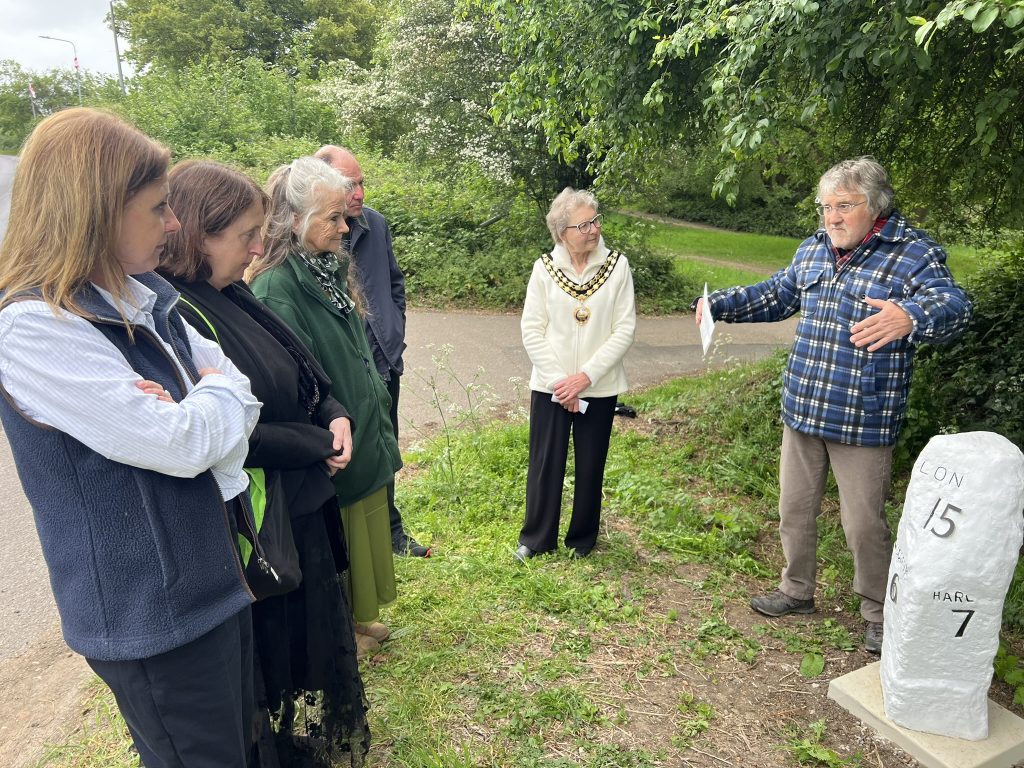
At the end of November 2024, I received an email from a gentleman named Jimmy Waters, who is a member of The Milestone Society and has been involved with the monitoring and restoration of surviving milestones from the Epping and Ongar Highways Trust 1769-1870. Jimmy, a local volunteer, has spent years working with authorities to try and improve the condition of these historic artefacts.
The concept of milestones dates back to ancient Rome, where they were used to mark distances along roads. The Romans laid well-constructed roads to facilitate the movement of soldiers and supplies, placing large cylindrical stones at intervals to indicate distance.
Turnpike trusts were established by Acts of Parliament in Britain to maintain and improve roads through toll collection, significantly contributing to the transportation revolution of the 18th and 19th centuries.
From 1767 Milestones (including Mileposts) were compulsory on all turnpike roads to inform travellers of direction and distance to major towns, help coaches keep to schedule and charging for changing horses at coaching inns (normally about every 10 miles) and until 1840, to calculate postal charges before the uniform rate was introduced.
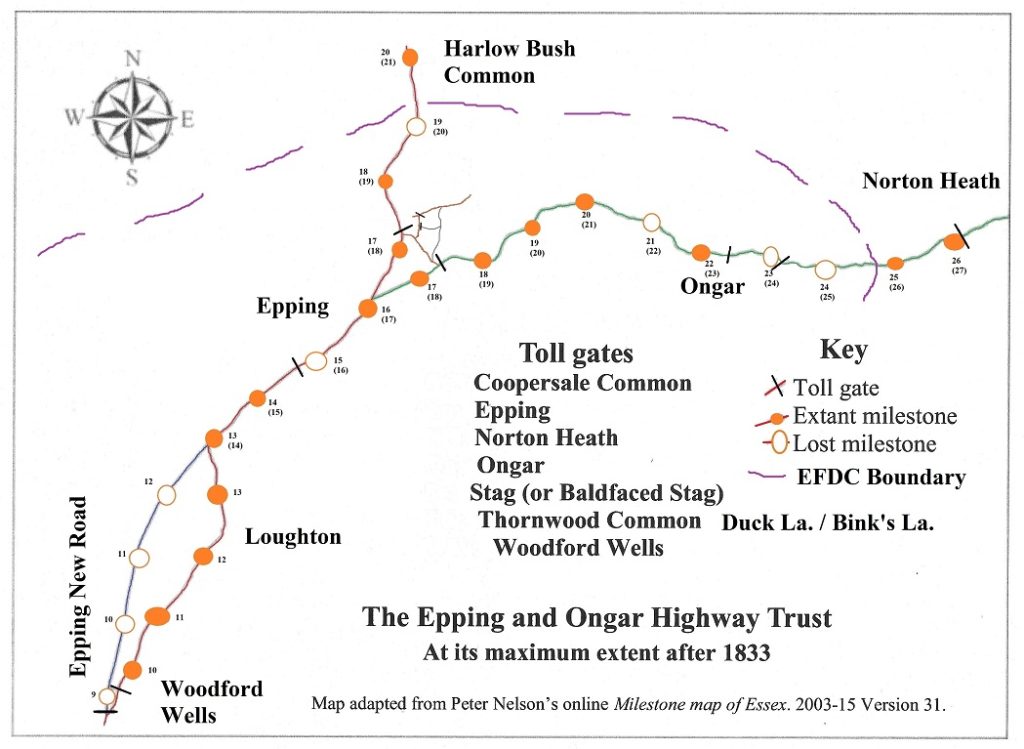
In 1768, an Act of Parliament transferring the management of the Epping Highways from Justices of the Peace at Quarter Sessions and local Magistrates onto Trustees, was passed. This enabled the formation of the Epping Highway Trust in 1769 to repair the road from the north part of Harlow Bush Common to Woodford.
The trustees would meet at the house of Grace Stokes (known as Epping Place) upon the first Tuesday in May, 1769, and proceed to the execution of this Act.
On the evening of Tuesday 2nd May 1769, 49 trustees of the Epping Turnpike Road assembled in Epping Place with John Conyers, Esq. appointed as Treasurer. William Dare and Thomas Smith – Joint Clerks, and William Hatchman Snr. the Surveyor. The first order being: “That a board should be forthwith painted and hung at each of the gates, mentioning the particular tolls to be demanded, and taken according to the Act just passed, which takes place at 12 o’clock this night.”
In 1787, the Epping Highway Trust also maintained the Ongar Road to Norton Heath, whence it became the Epping and Ongar Highway Trust, until it was terminated in 1870 due to railway competition. Milestones were altered due to the completion of the Epping New Road under surveyor John McAdam in 1833 that reduced the mileage to London by 1 mile.
An order in July 1837 stated: “That the milestones on the Epping Road be painted and lettered and figured correctly”.
During the Second World War, British milestones were ordered to be buried, to avoid giving the opposing forces any advantage, so many were lost. Others had been consumed by the Forest’s natural growth or destroyed by vehicle collisions over the years.
Of the original 26 stones, 18 now remain. That is an exceptionally high amount of roadside heritage, which we should be proud to conserve.
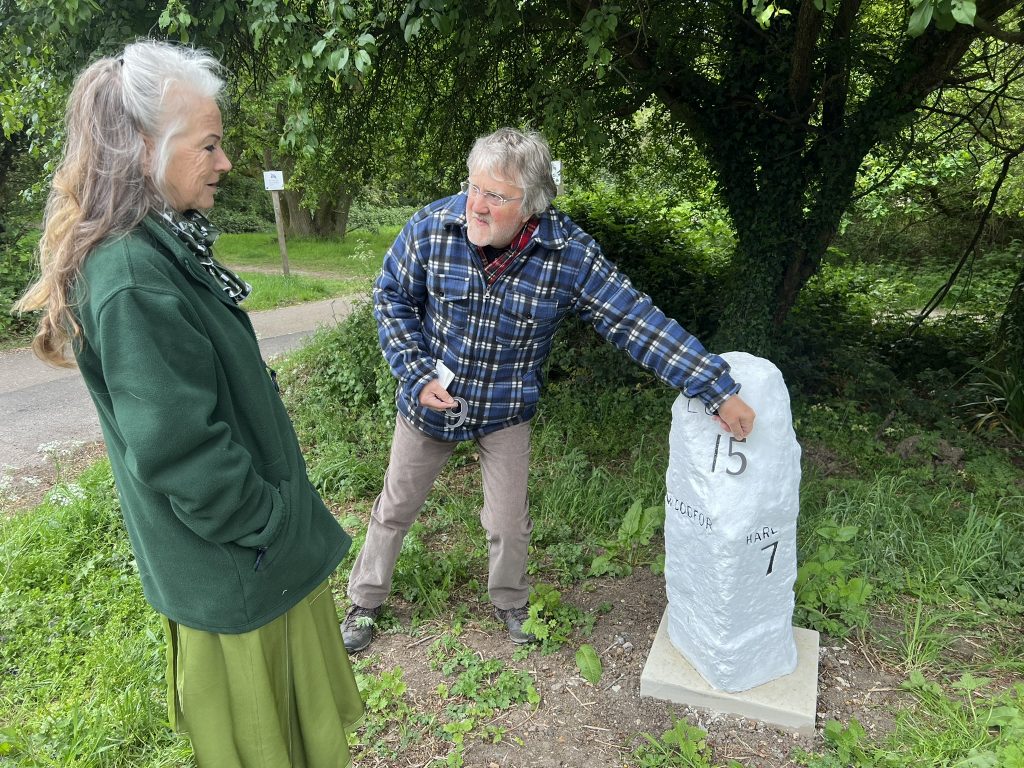
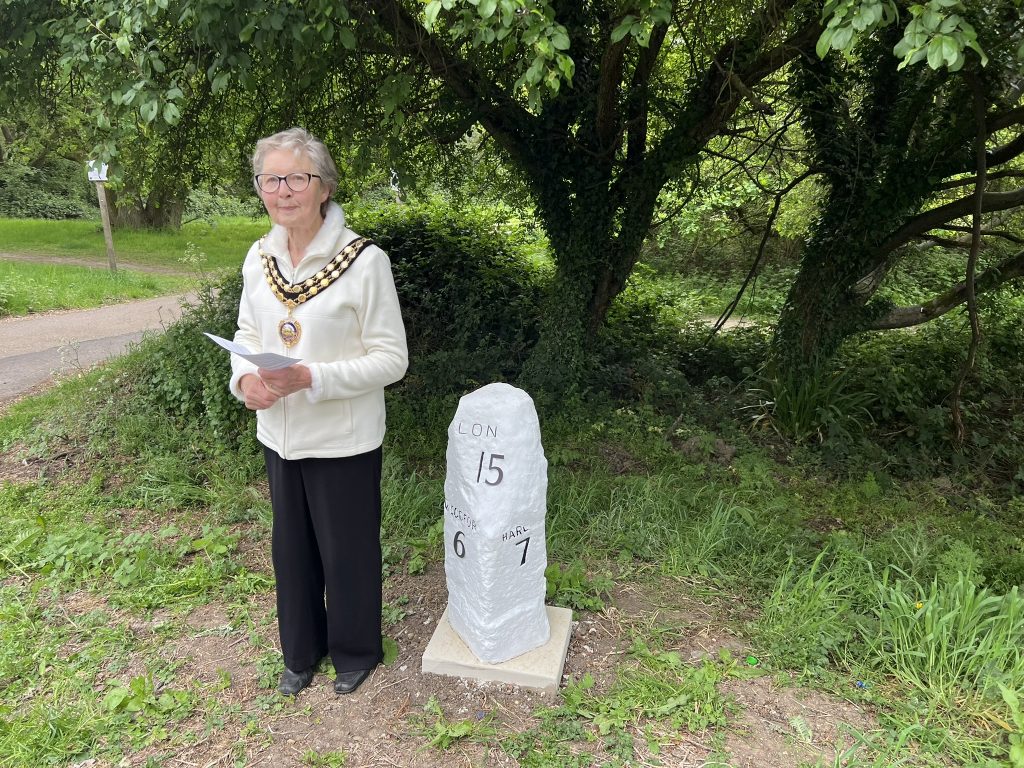
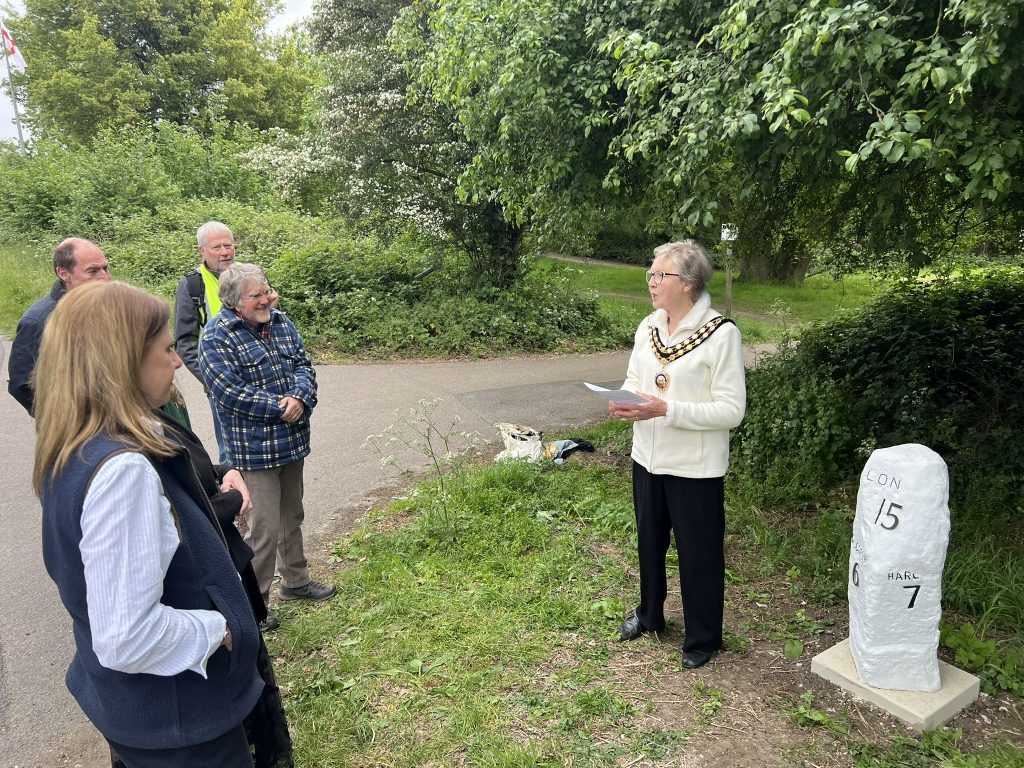
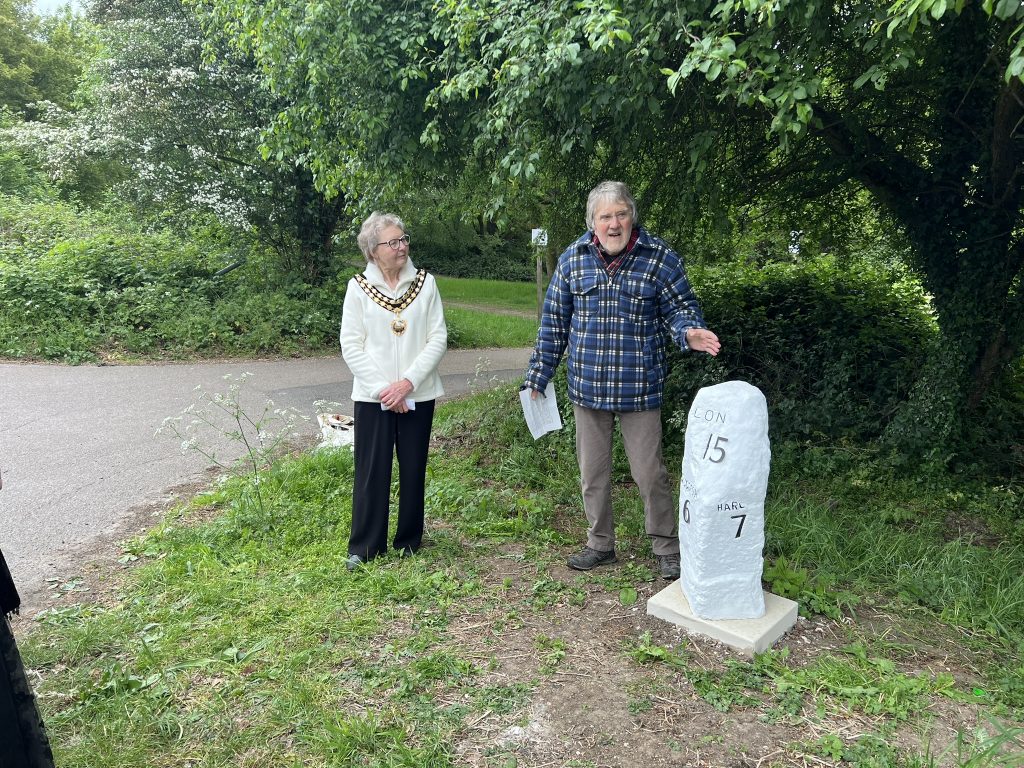
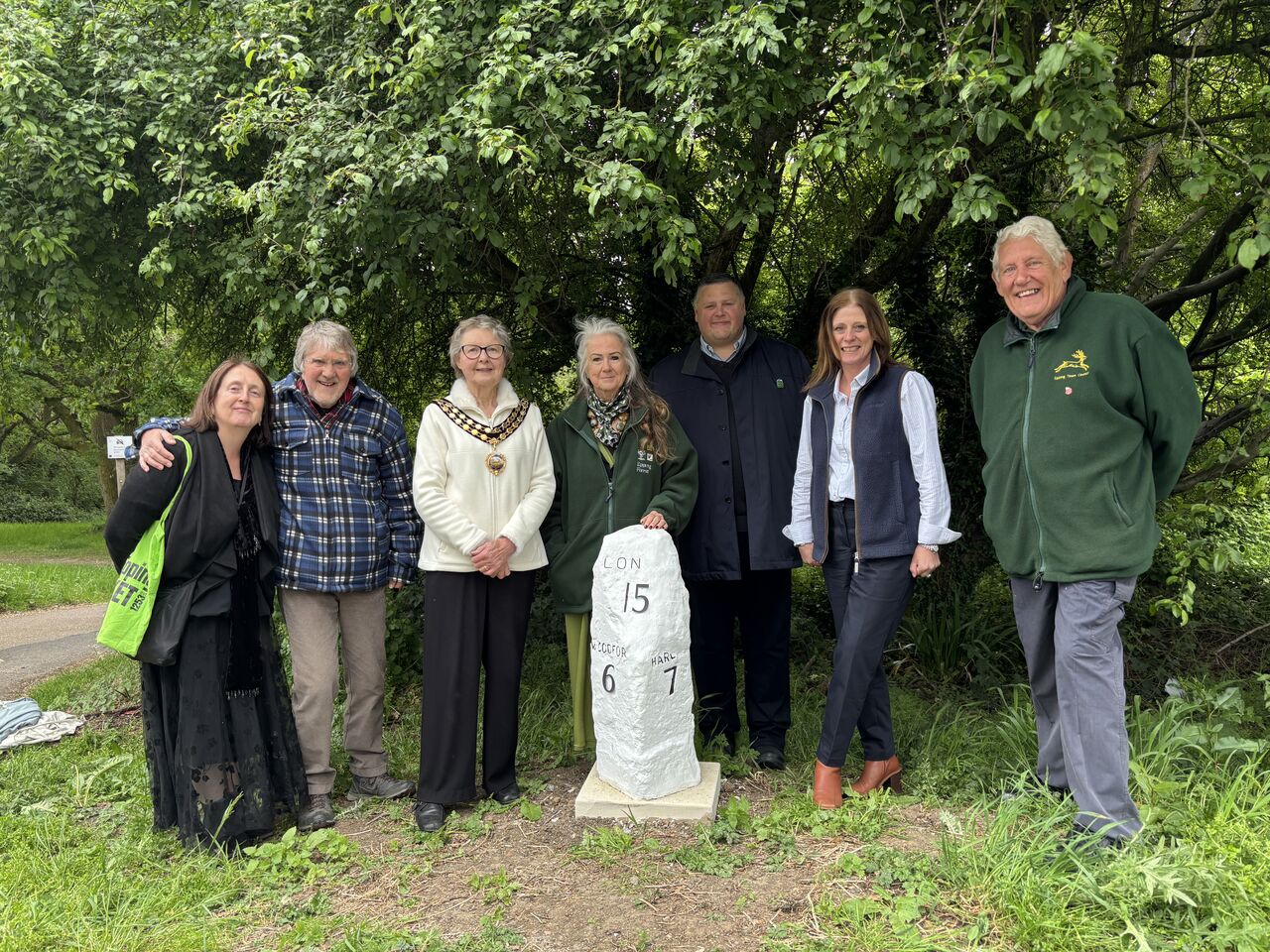
With some financial assistance from Epping Town Council and the City of London Corporation’s Epping Forest charity, Jimmy has worked tirelessly with stonemason Stan Reynolds, to repair the latest milestone known as “London 15”. It has moved location slightly to give it a stronger roadside prominence and is now located on Epping High Road next to the bus shelter on Bell Common.
Whilst the skilled stonemason has managed to reconstruct the milestone, there is still some work to be done on the new numbers and lettering, but it is certainly looking much better and now forms part of the community’s heritage features.
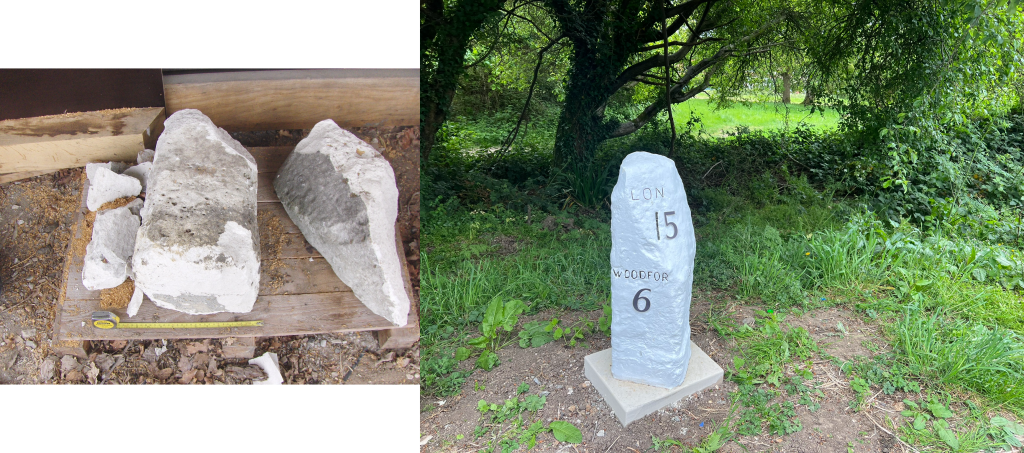
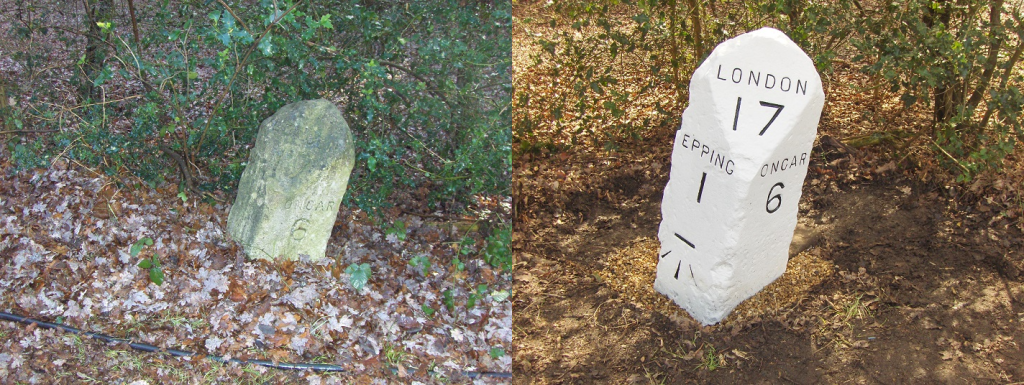
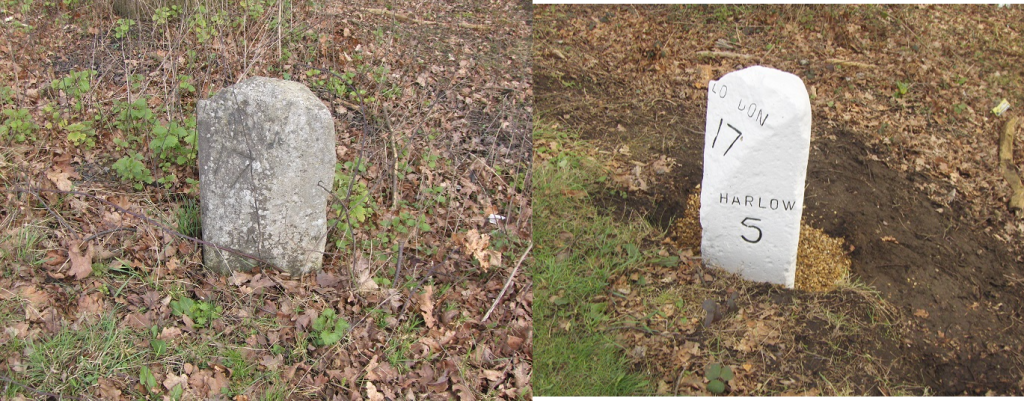
Jimmy and his team have also worked on several other milestones over the past few years, including the two in Epping Forest below…
London 17 on the B.181 Epping – North Weald Road before and after.
London 17 on the B.1393 High Road Thornwood Common before and after. Badly damaged by flails.
Well done to Jimmy, Stan, Epping Town Council and our team at Epping Forest.
Below as a few photographs of Epping Town Mayor, Councillor Janet Whitehouse and Epping Forest and Commons Committee Chair, Councillor Caroline Haines, unveiling the restored milestone on 11th May 2026.