In January 2026, the Home Office published a white paper on police reform, From local to national: a new model for policing. In the King’s Speech 2026, the government committed to introduce a Police Reform Bill to implement commitments in the white paper.
The proposals include significantly reducing the number of police forces in England and Wales, by merging existing forces into larger regional police forces. The government has not propose what the new geographies of these larger forces will be yet. Instead, it has set up an independent review that will propose the best way to organise regional police forces.
In addition, the government proposes merging the National Crime Agency, College of Policing and the National Police Chiefs’ Council into a new National Police Service, which will lead on serious and organised crime and counter terrorism. The National Police Service would be led by a chief constable called the National Police Commissioner.
The white paper makes several other proposals for reforming policing, including to:
* scrap police and crime commissioners and establish new policing and crime boards (made up of mayoral authorities and council leaders)
* give a new power to HMICFRS to issue “directions” to police forces that fail to implement recommendations
* re-establish a power for the Home Secretary to force a chief constable to resign or retire
* require police officers to hold a “licence to practice”, which will involve mandatory training requirements for officers to continue to serve
* deliver a police national workforce strategy, with a focus on ensuring recruitment of both neighbourhood police officers and specialists that can support the police to respond to modern threats
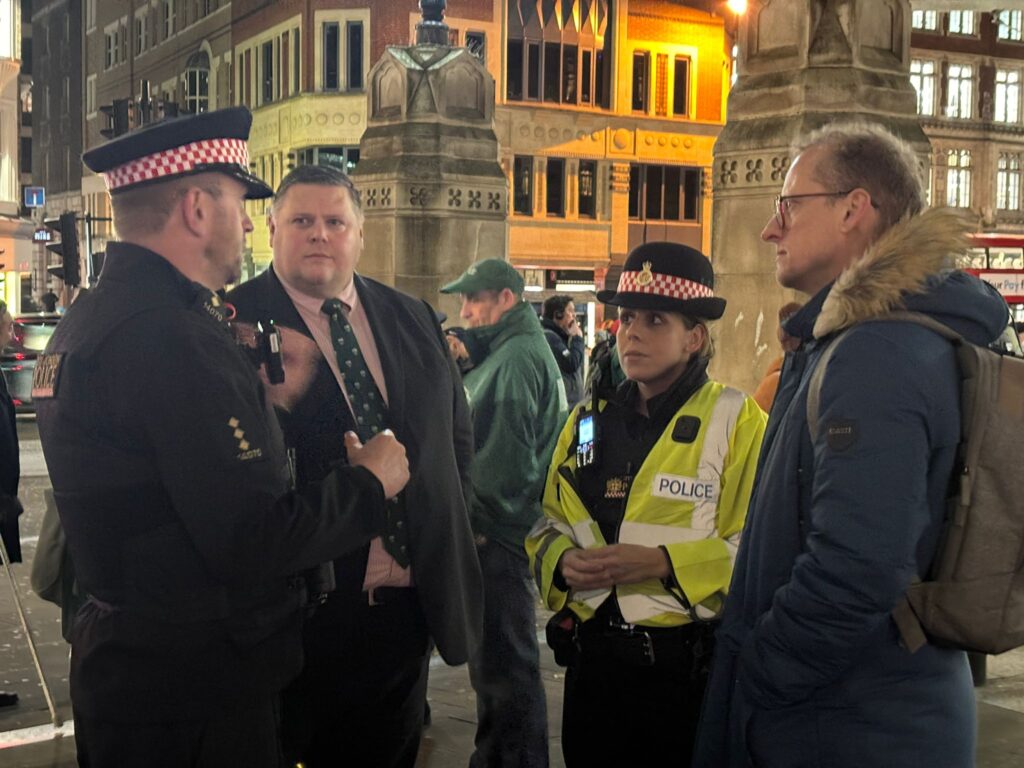
So how could this impact the City of London?
The City of Police was officially formed in 1832, with the passing of the City of London Police Act 1839, which gave statutory approval to the force as an independent police body and headed off attempts made to merge it with the Metropolitan Police.
As a global financial hub critical to the UK’s national security, the City of London Police has successfully provided traditional local policing to the millions of residents, workers and visitors who come into the Square Mile annually, resulting in the area being the safest city in the UK. Above and beyond this, the very real threat of terrorism has been well-managed by the Force. It’s deep relationships with global businesses located in the Square Mile gives it a unique ability to
It is possible that the City of London Police will be consumed by the Metropolitan Police covering Greater London and the City of London Police’s National Lead Force responsibilities for economic and cyber crime could be moved to a new National Police Service. The impact of those changes could be sever for the level of service, engagement and outcomes businesses, residents and visitors to the City of London have enjoyed for many years.
I would particularly note that the police force inspection reports (Police Effectiveness, Efficiency, and Legitimacy) show that the City of London Police force is among the few in the UK without any ‘requires improvement’ grades for this inspection period, highlighting consistent high standards. In contrast, the Metropolitan Police is judged as having 5 areas in which is requires improvement and 2 areas which are inadequate.
Does the City of London Police support reforms?
Yes! The City of London Police have pro-actively been working with Lord Hogan-Howe, Home Secretary and Securities Minister to propose a range of changes which could improve the UK’s national security and changes to local policing which can improve outcomes for victims. Very often, operations designed by the City of London Police are rolled out nationally with significant impacts.
The City of London Corporation has also partnered with the Ministry of Justice to fund and build a new state-of-the-art £633m headquarters for the City of London Police with 18 new courtrooms. The facility will consolidate the Square Mile’s civil and magistrates’ courts and provide specialist capacity for economic and cyber-crime cases, creating a new national hub. The City of London Corporation will charge the Ministry of Justice a peppercorn rent, providing a gift to the nation which is set to open in 2027.
So what can I do if I don’t want the City of London Police to merge with the Metropolitan Police?
Put simply, get in touch with me here: Contact Ben – Benjamin Murphy. You can join many voices, which includes the Governor of the Bank of England and international business leaders in making representations to the Home Secretary that this is the wrong decision for the City of London and a the United Kingdom. The evidence overwhelming speaks for itself.