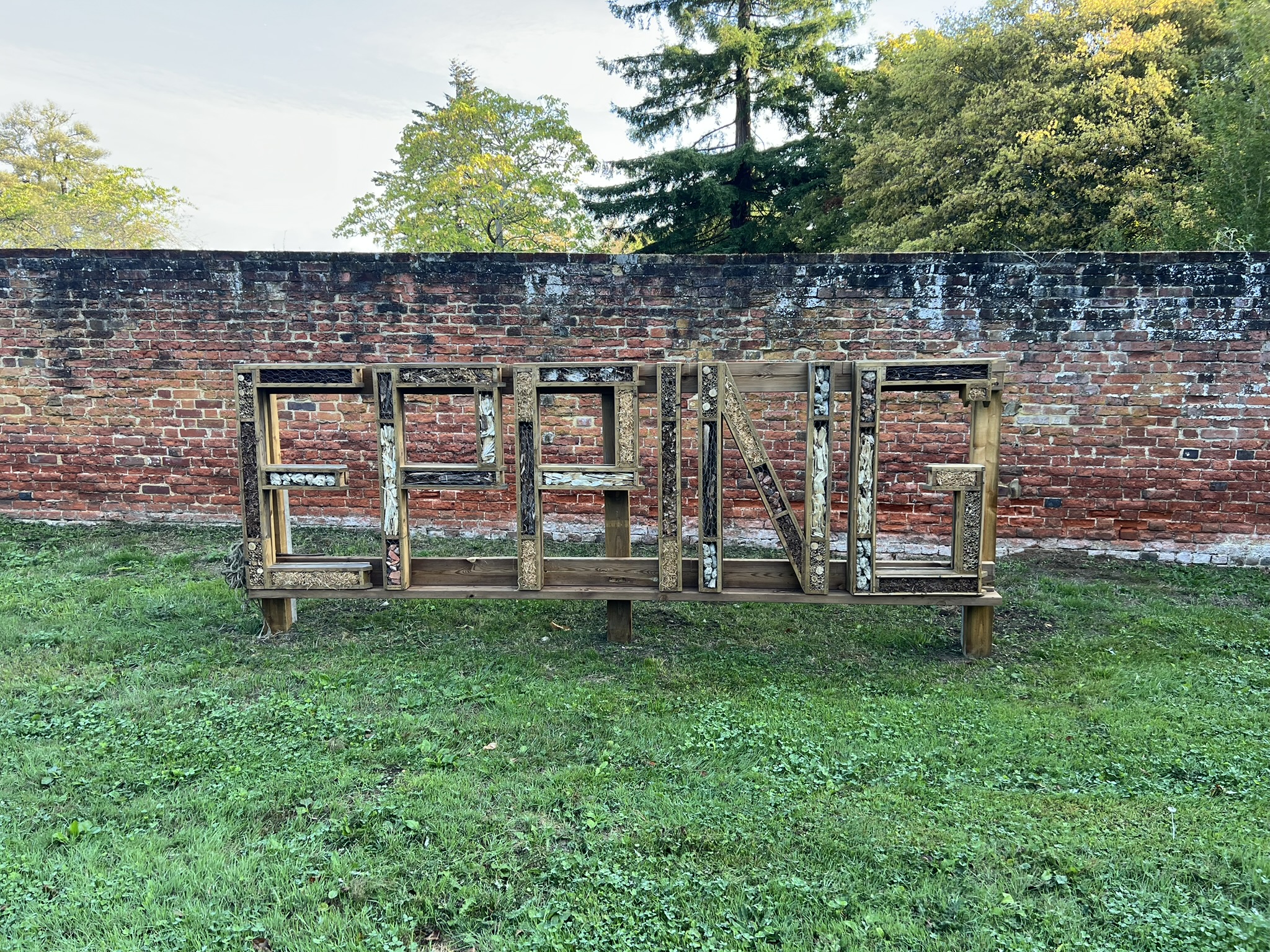
As regular readers will be aware, over the past couple of years Epping Forest’s operating structure has been undergoing a pretty radical transformation, including a staff restructure to attract new talent, retain existing talent and add resilience to the growing list of challenges faced by the Conservators of this internationally important site, enjoyed by millions of people annually.
Whilst it sounds simple on paper, the operational implications of the restructure has required months to review and update job profiles, consult staff and unions on how best to organise ourselves, analyse market positioning across the industry, then write and publish job specifications, review the thousands of applicants, host hundreds of interviews, then onboard successful candidates. This restructure has not only allows us to promote hard-working talent, but also to move staff sideways across the Corporation, to explore new pathways and skillsets.
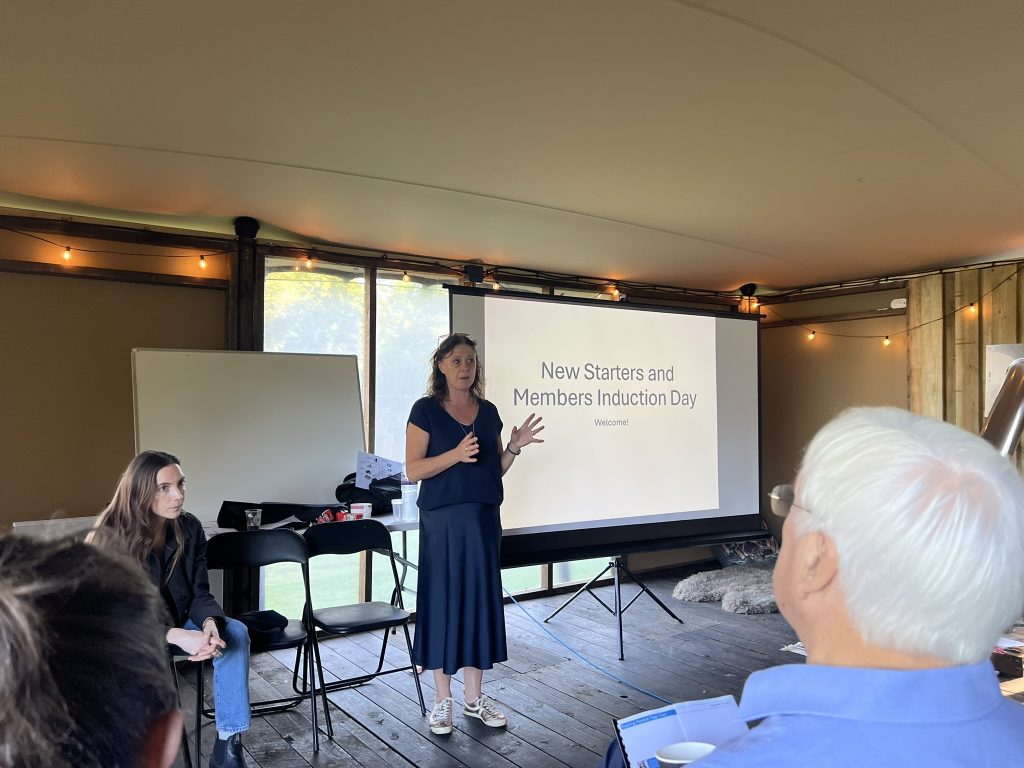
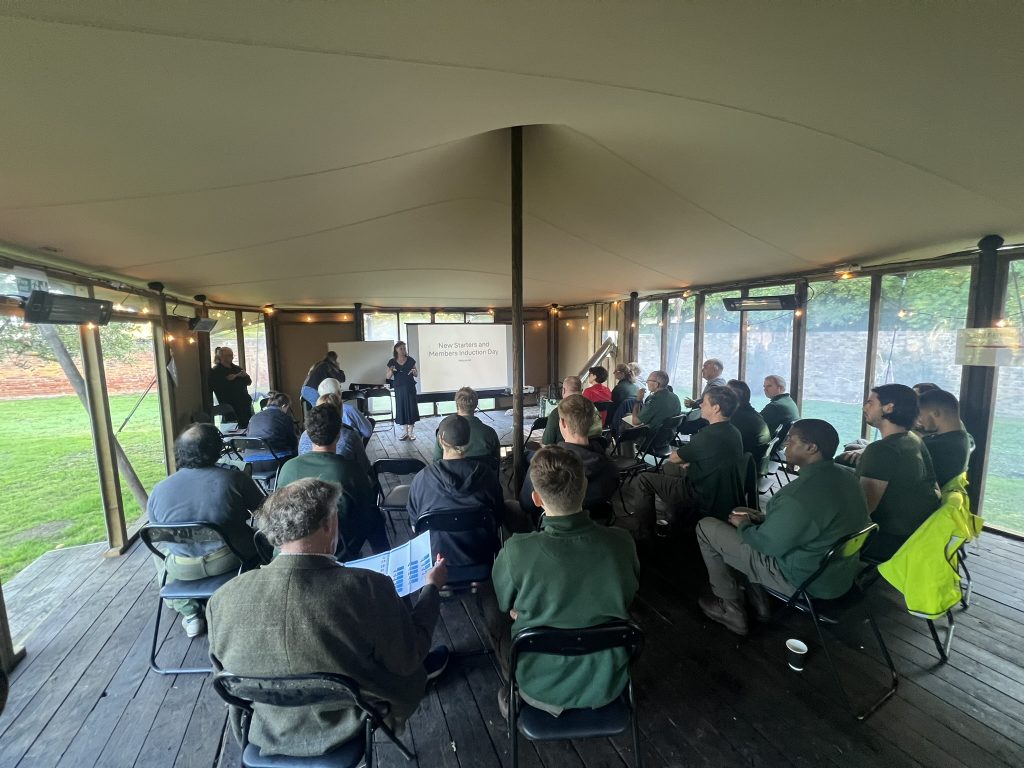
With almost 45% of Epping Forest’s staff joining in the past 12 month, setting out a framework for induction and continuous training and development has been critical, to ensure we foster a culture of collaboration, clarify the strategic golden thread so that everyone understand our mission and purpose, and have a workforce which feels valued and supported in their own ambitions.
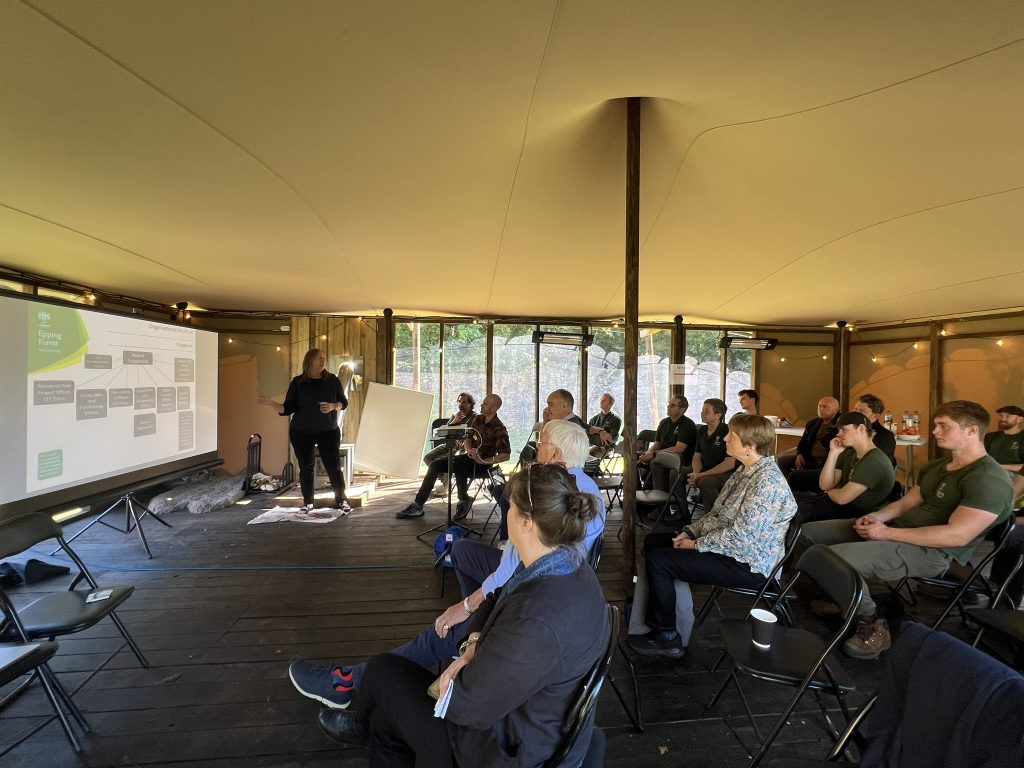
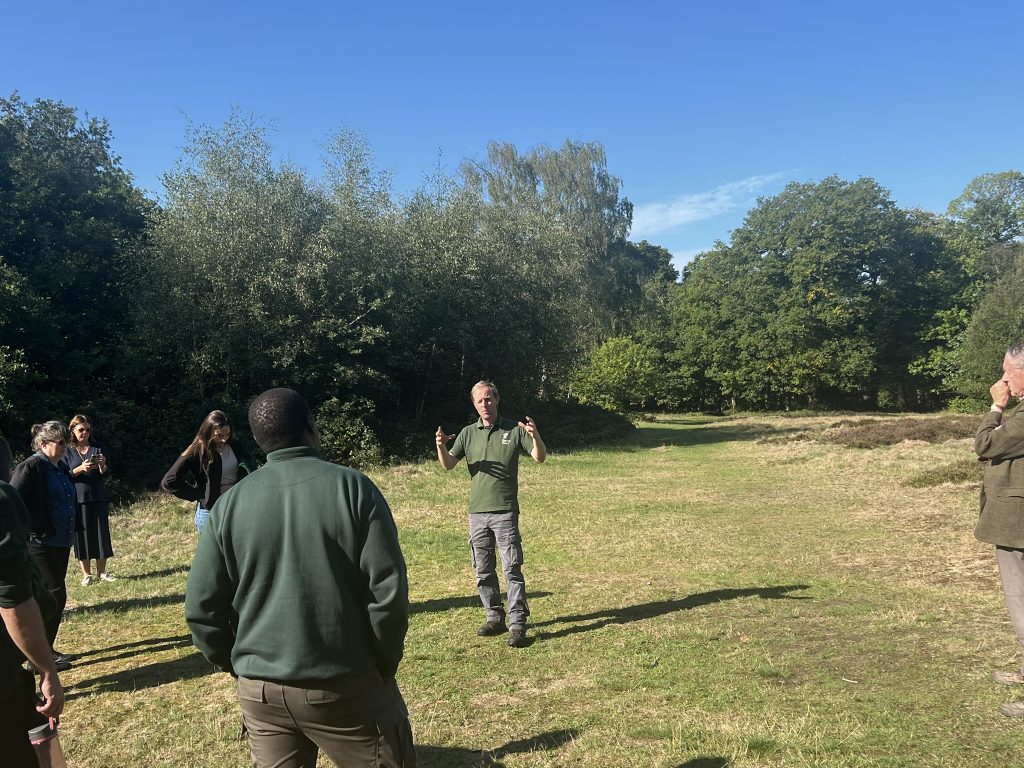
To help explain how the whole is greater than the sum of its parts, staff and members were brought together this week to discuss and question each of the teams on what they do and why they do it.
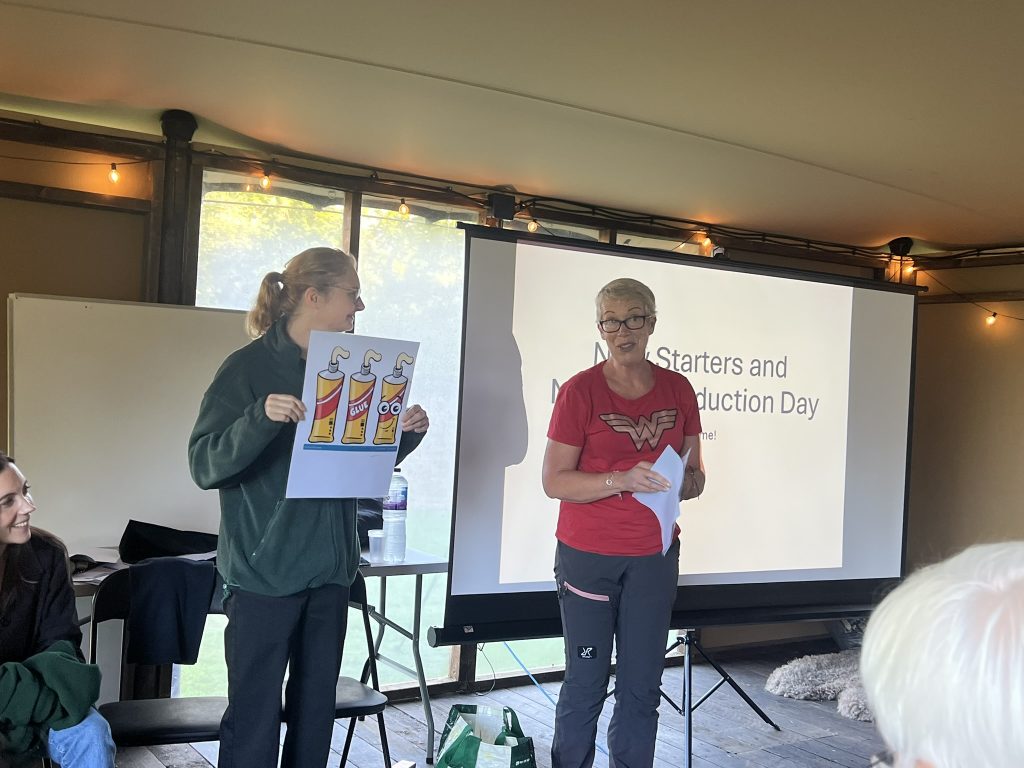
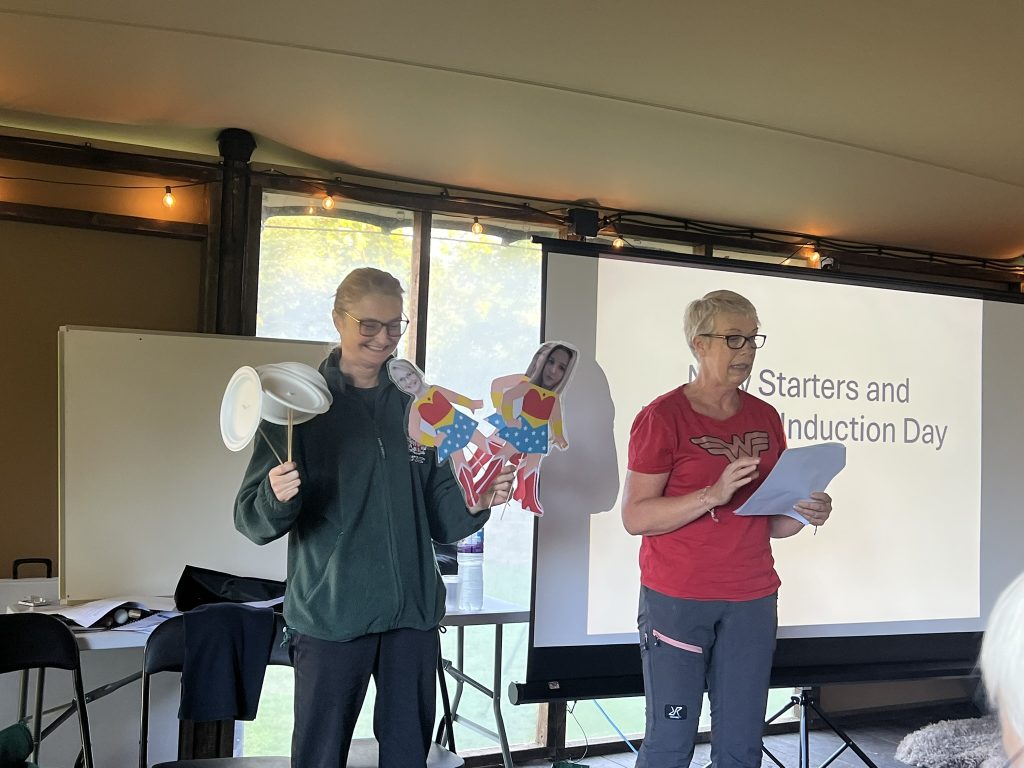
Discussions were wide-ranging, with updates from the Superintendent and the Office Management team, who were described as the glue that binds all of the other teams together, whilst keeping the many different plates spinning (including the more than 1,000 email requests from the public each day!) They also manage the Customer Relationship Management (CRM) database, to ensure every enquiry is processed effectively and efficiently, and that the desired outcomes are achieved.
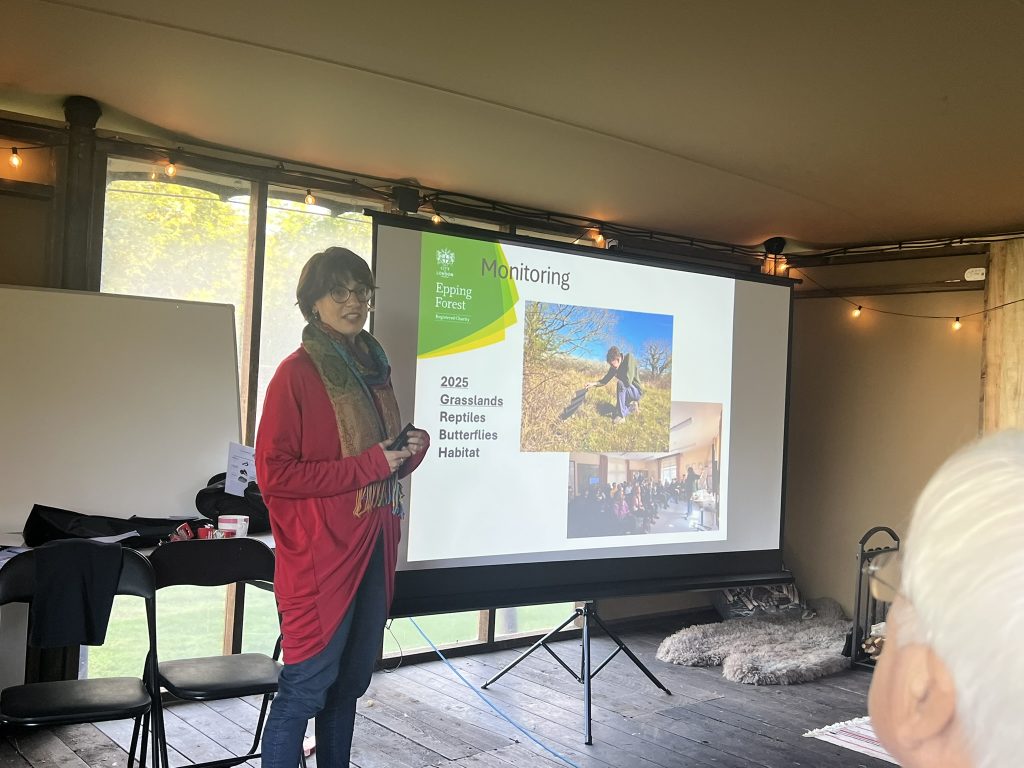
Next, the Conservation team provided an overview on what it means for Epping Forest to be categorised as a Special Area of Conservation (SAC) and Site of Special Scientific Interest (SSSI). In an interactive quiz, new staff were asked to identify what features make Epping Forest an SAC (which are of course Inland Water Bodies (standing water, running water) 6%, Bogs, Marshes, Water fringed vegetation 0.2%, Heath, Scrub, Maquis and Garrigue, Phygrana 3.8%, Dry grassland Steppes 20% and, Broad-leaved deciduous woodland 70%).
The Conservation team spoke about ecological monitoring surveys, arboricultural maintenance, conservation grazing and partnership with government departments (like Defra) to support the national nature recovery, through habitat restoration work covering heathland, pollarding and wood pasture management.
The Conservation team also includes the Sports Management team who do a brilliant job year-round maintaining our award-winning golf greens, Europe’s largest collection of grassroots football pitches, cricket fields, boating lakes, etc.
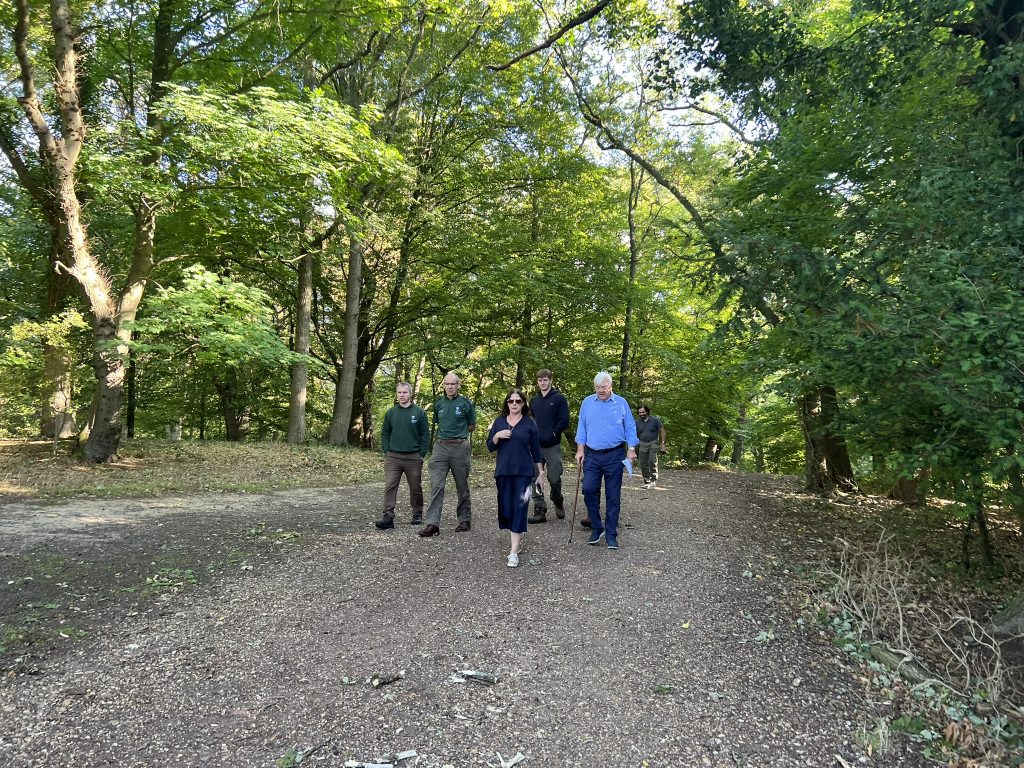
There was an opportunity to get out into the Forest and see some of the special features first-hand, and hear about why different management techniques are used to support the Forest’s long-term management plan. With 55,000 ancient trees and more than 1 million trees in total, the arborist team are always kept busy.
We also learnt about why different activities can only be carried out at certain times of the year, to avoid things like wildlife nesting/breading seasons, or to avoid damage to the Forest floor in wetter conditions.
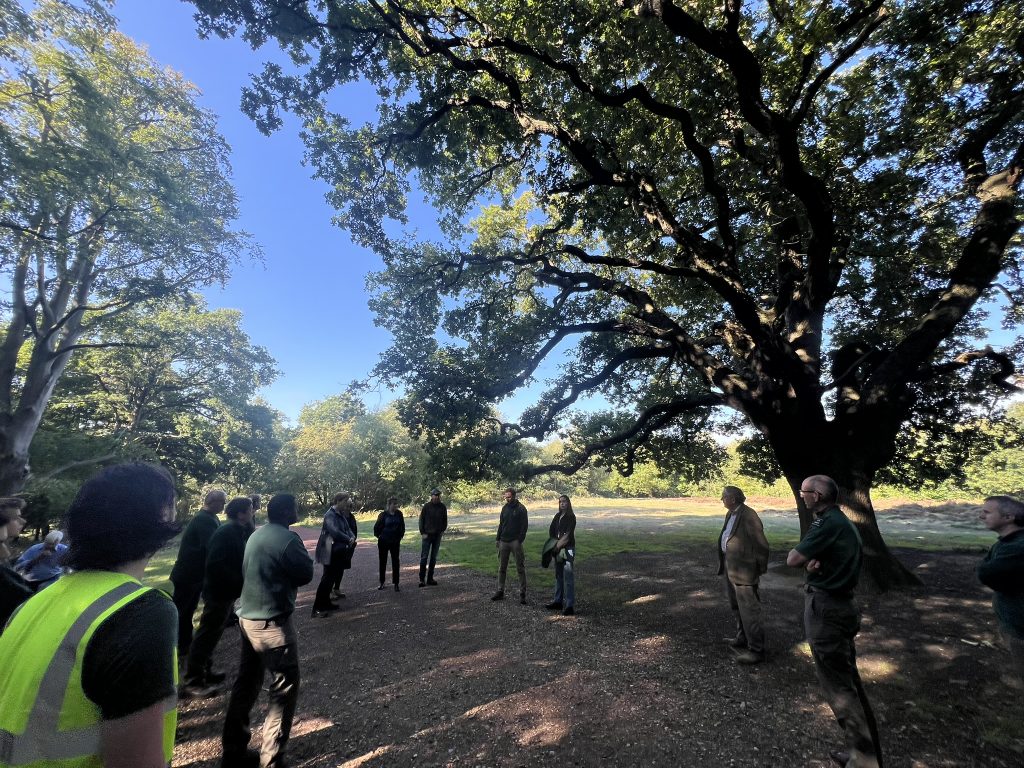
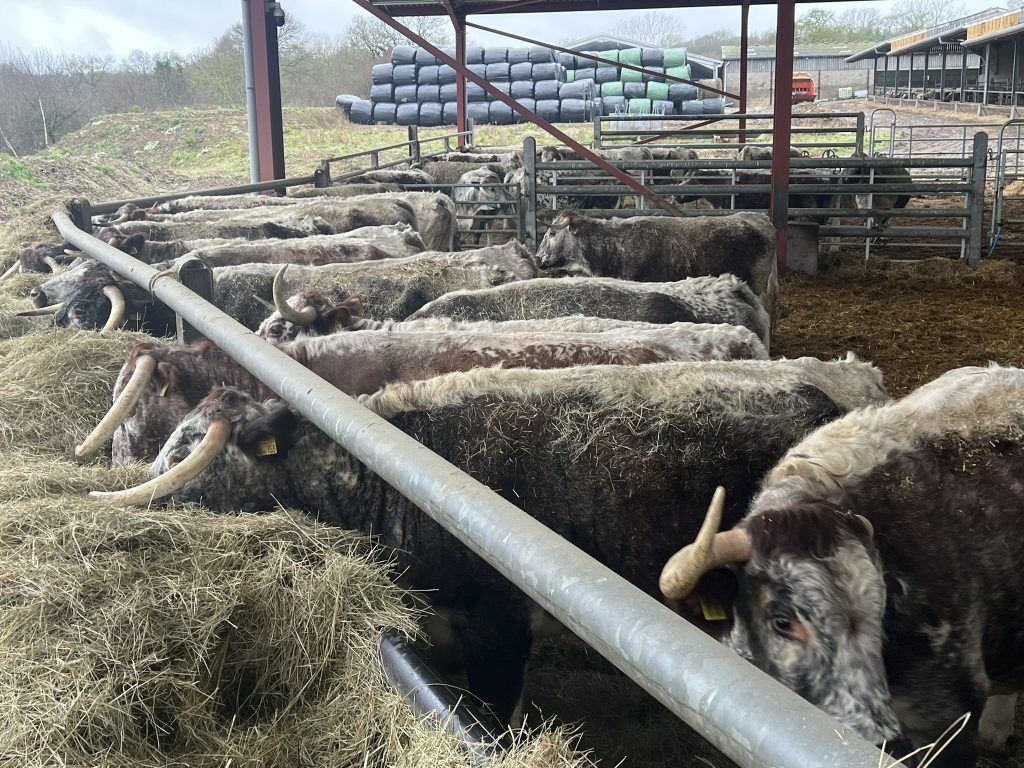
Standing under Qvist’s Oak on Warren Hill (named after Alfred Qvist, the Superintendent of Epping Forest from 1949-1978), we heard from the grassland team who outlined the importance of healthy soil and the role the 300-strong herd of cows play, but also the importance of how to operate vehicles when moving around the Forest day-to-day to avoid damage. We learnt about the role decaying wood plays in the Forest’s delicate ecosystem, which feeds so many organisms. Often, the real challenge for staff is having to strike a balance between wanting to conserve the natural environment and having to create a safe space for millions of visitors.
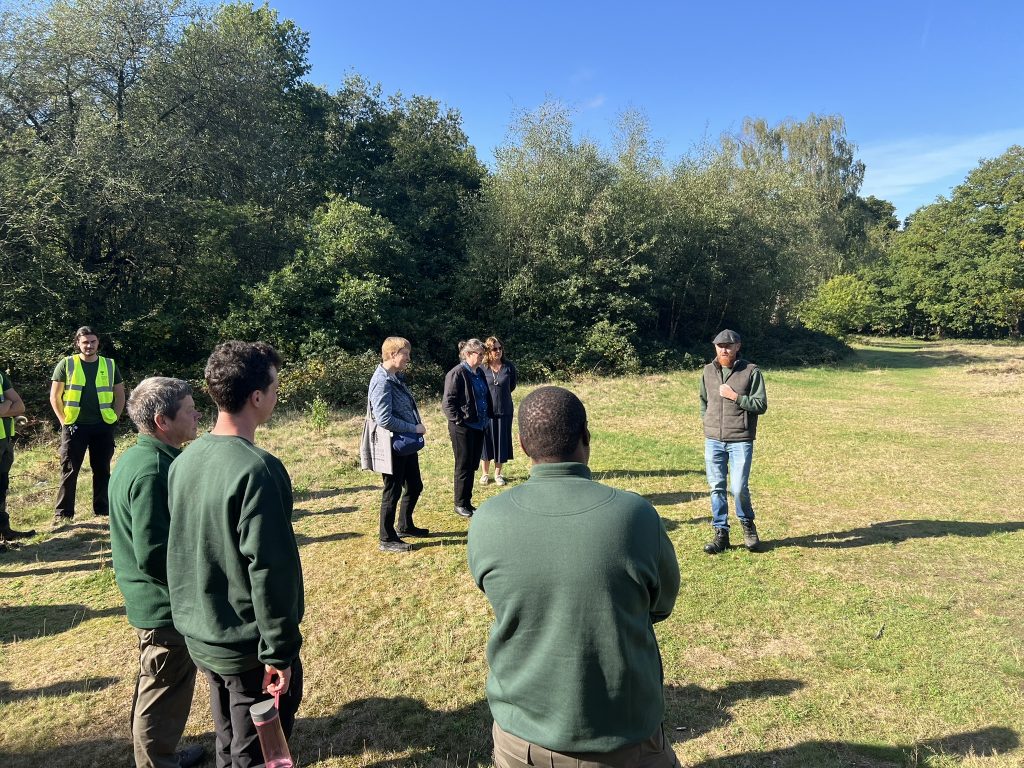
Next was probably the best known team – the Forest Keepers. The Keeper’s role is split into several parts. They provide on-the-ground cover around the Forest 365 days a year, ably supported by a team of casual workers and trained volunteers.
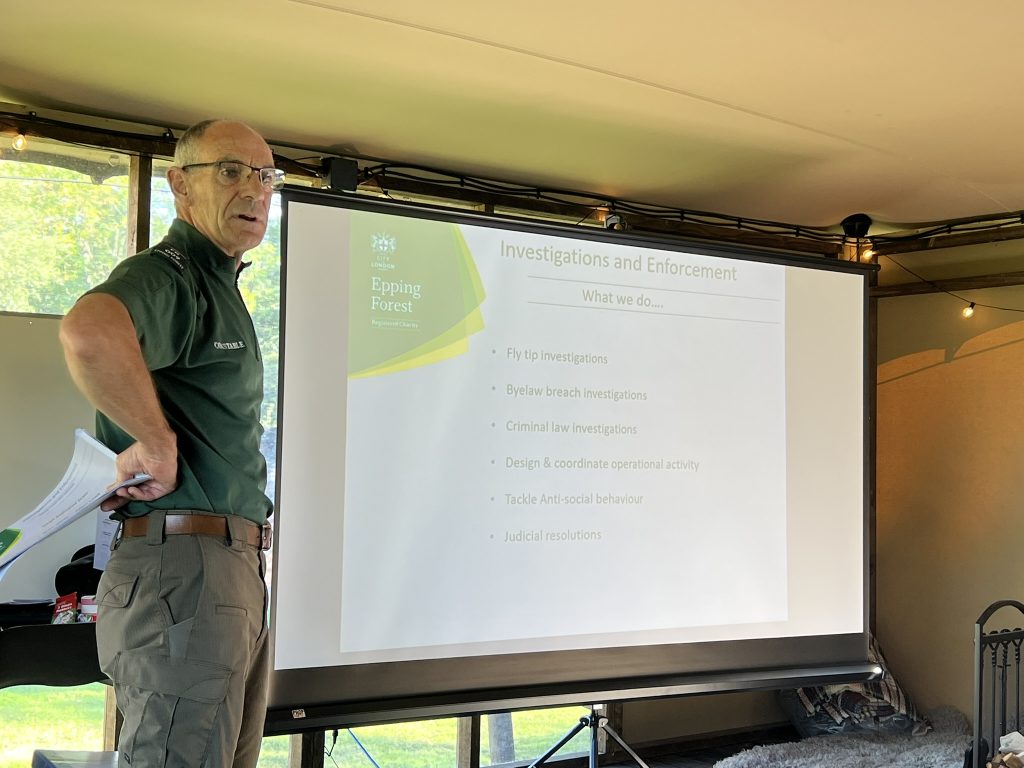
The Forest Keepers are mentioned in the Epping Forest Act 1878. Alongside the Superintendent, a number of Keepers are attested Police Constables, giving special legal powers and duties to enforce our byelaws. They carry out a wide range of investigations and work closely with courts to pursue civil and criminal cases to protect the Forest. The team also work closely with local authorities, other landowners and police teams in Essex and London to prevent or detect criminal behaviour, particularly anti-social behaviour. The Keepers are often our first responders to emergency incidents such as accidents, wildfires, and sadly even the discovery of expired bodies. They’re also the team that gets to interact with the public, face-to-face, helping provide guidance or support.
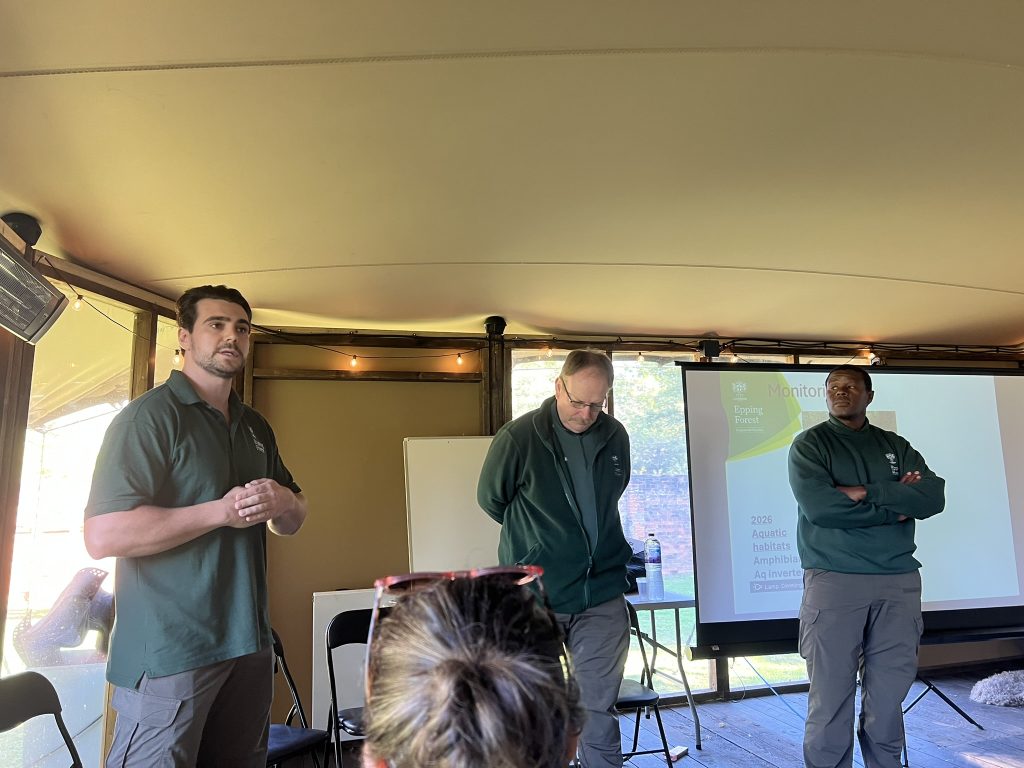
Within the Keeper group we have the recycling and waste management team, who do an excellent job keeping the site clean and our environmental footprint as green as possible. One of the real challenges for this team and our education and comms team is to reduce the £650,000 a year our charity has to waste in cleaning up flytips – that’s before we factor in the cost of emptying hundreds of bins and cleaning up general litter to protect wildlife.
We also have the Estate Management team who are responsible for building a range of innovative solutions or delivering projects needed to enhance the Forest. From installing new paths and signage to maintaining operational assets.
To help new staff get a feel for quite how vast the estate is (the Forest itself is more than 12 miles long!), a walk of the works unit took place, to see assets such as our in-house garage, where mechanics are responsible for maintaining our fleet of vehicles, from cars and vans to HGV lorries, tractors, trailers, golf buggies, lawn mowers…the list goes on!
Many jobs in Epping Forest carry significant risks, so we also have a health and safety management team, who ensure every element of our works units, farm, visitor centres, lakes, offices, and other sites are kept as safe as possible.
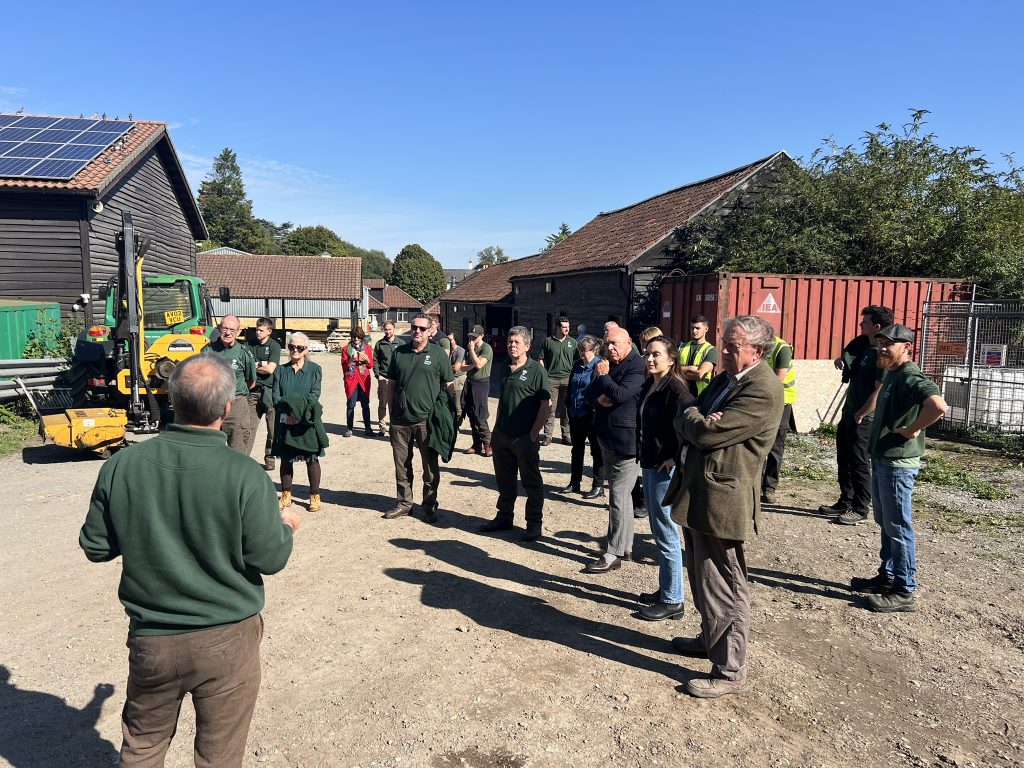
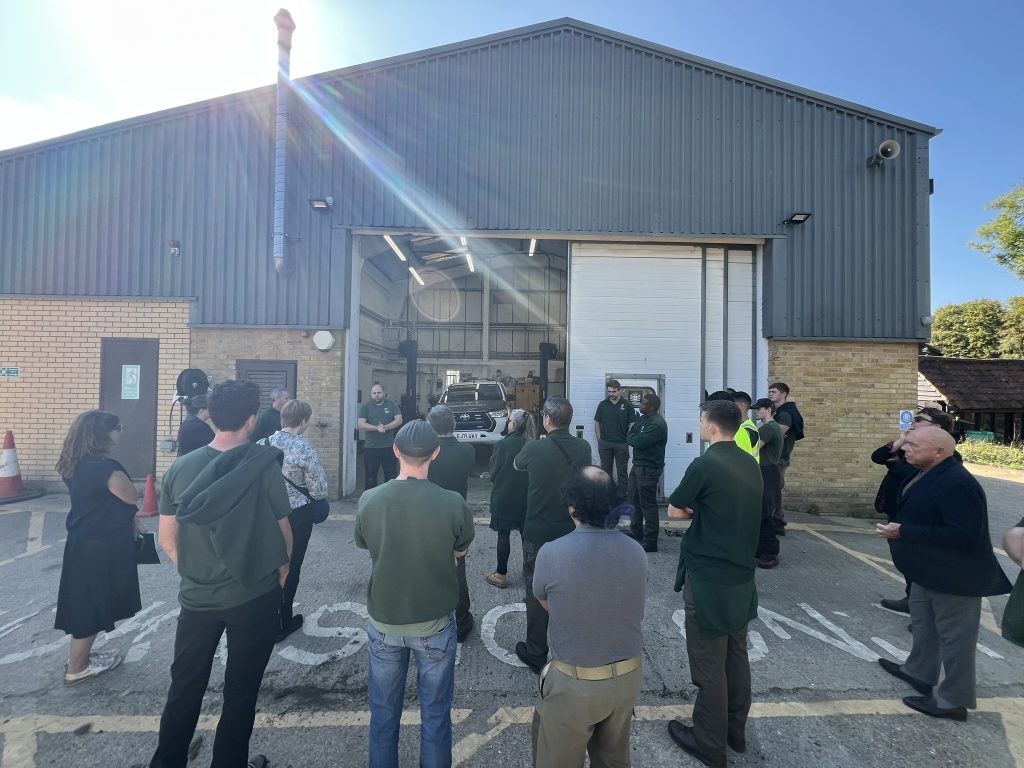
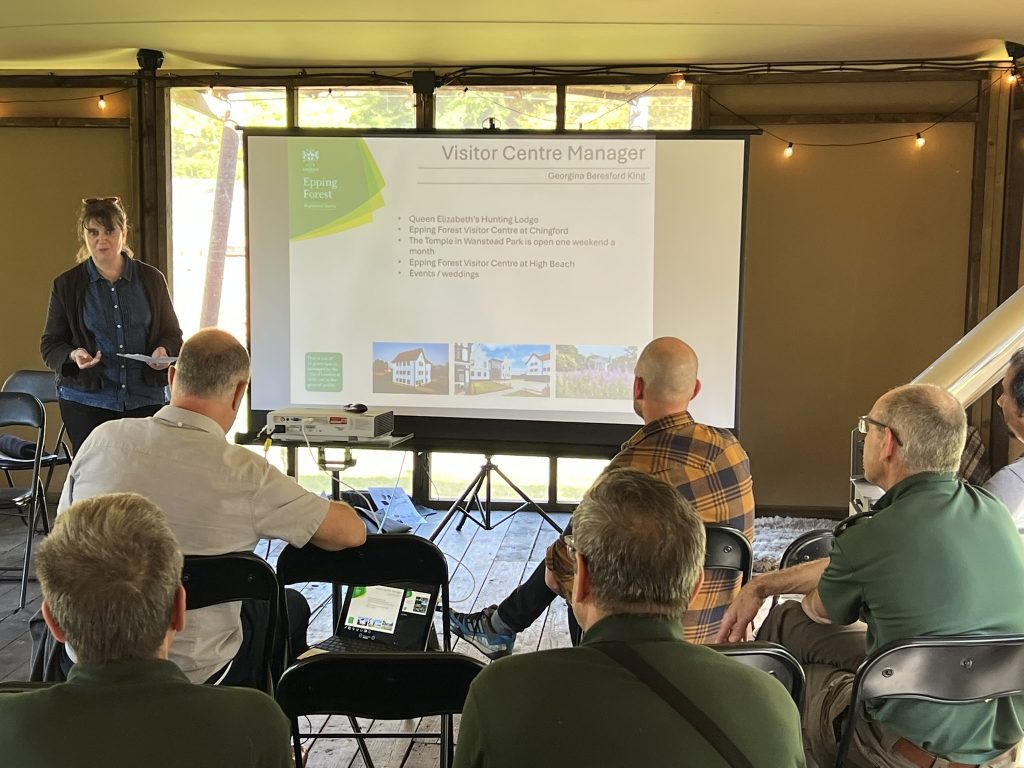
Our newly created Engagement Team explained that they are responsible for recruiting and supporting our army of volunteers, whether they volunteer as individuals, corporates or through community groups. They have recently done a great job engaging younger volunteers to step forward and become the next generation of conservators!
They also run all of our external communication channels, such as our volunteer guide, annual report, newsletter, social media, etc. Within the campaigns group, they help us share our work with stakeholders, explaining why we need to do certain things to protect the long-term health and wellbeing of the Forest. Our new story maps are a great example of the way we keep stakeholders updated on habitat restoration.
The Engagement Team also run our visitor centres, museum, archives and are the liaison to the Epping Forest Field Studies Centre. They are responsible for much of the creative design work that goes into interpretation and signage around the Forest. The Engagement Team also facilitates weddings and events.
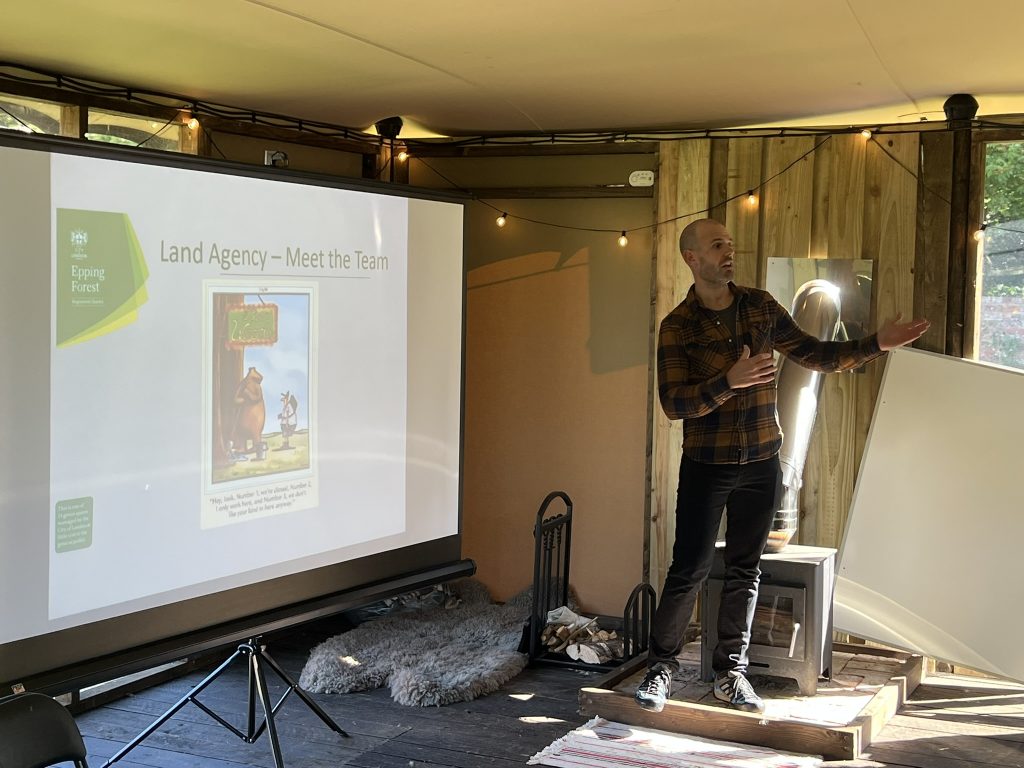
Finally, we heard updates from the Land Agency and Planning team. They are responsible for reviewing and responding to planning applications across Waltham Forest, Newham, Redbridge, Enfield and the Epping Forest District each week, providing technical guidance. They also support the formation of each local planning authority’s ‘Local Plan’, which seeks to mitigate the impact of planned development on the Forest. This often requires working closely with specialist planning barristers, the Comptroller and City Solicitor, HM Inspectorate of Planning, Natural England, English Heritage and a wide range of campaign groups.
The team are also responsible for licensing, which includes everything from public events on Forest land through to wayleaves and easements for utilities companies and highways agencies. The team perform local financial compliance and oversee commercial lettings in buildings and homes owned by the charity.
They also manage our Geographic Information System (GIS), which maps out everything which is not immediately obvious to the naked eye and documents when things are accessed or changed, to keep a single central record.
In addition to the 100 staff based locally in Epping Forest, there are teams based at the Guildhall in London which support operations centrally. For example, the Chamberlain’s finance, charity reporting, audit and procurement teams. Our Chief People Officer’s HR team. The Comptroller and City Solicitors legal team. The Town Clerk’s committee services and governance teams. The City Surveyors and District Surveyors teams. The Education and Culture teams. Technology teams. Our media liaison groups. The list goes on…
Following the formal sessions, it was great to ‘break bread’ and chat informally with all of the staff. It’s wonderful to see the joy on people’s faces knowing fresh talent has arrived and is adding value after a period of strain, in addition to the genuine satisfaction new staff are reporting, coming to work to do a job they love, well.
At the City of London Corporation, we often say that our people are our greatest asset and it’s true. I hope this article gives you a flavour of the many hands required to keep Epping Forest operating to such a high standard.
If you’re interested in exploring a career with the City of London Corporation, you can check out our latest vacancies here: https://careers.cityoflondon.gov.uk/