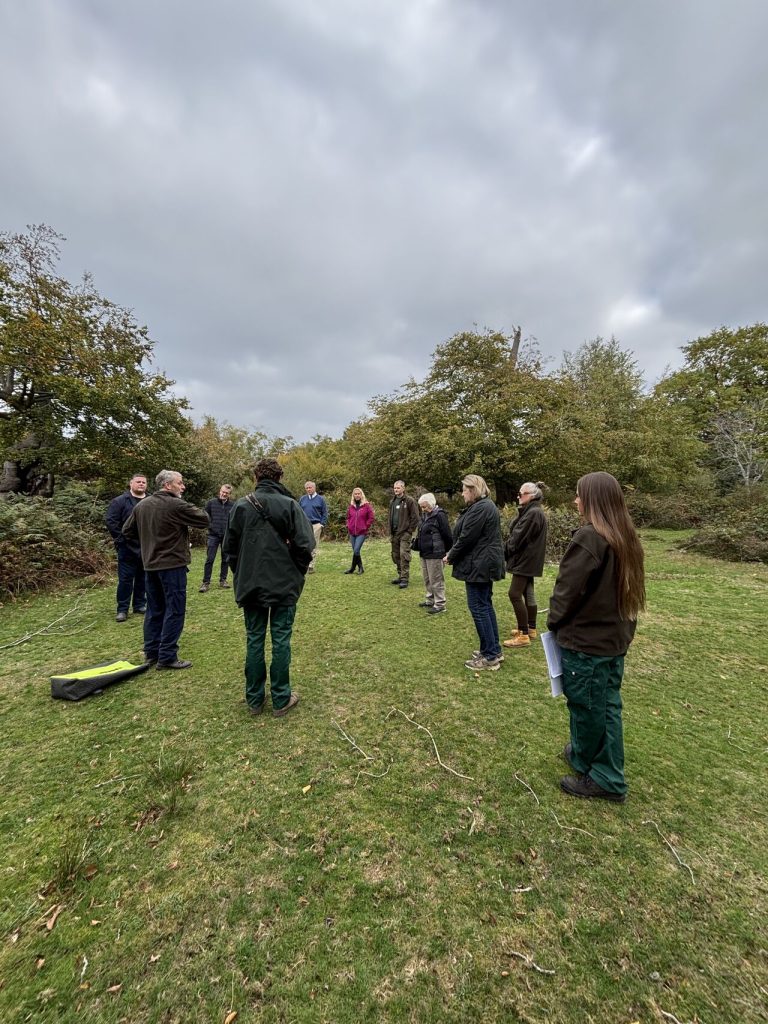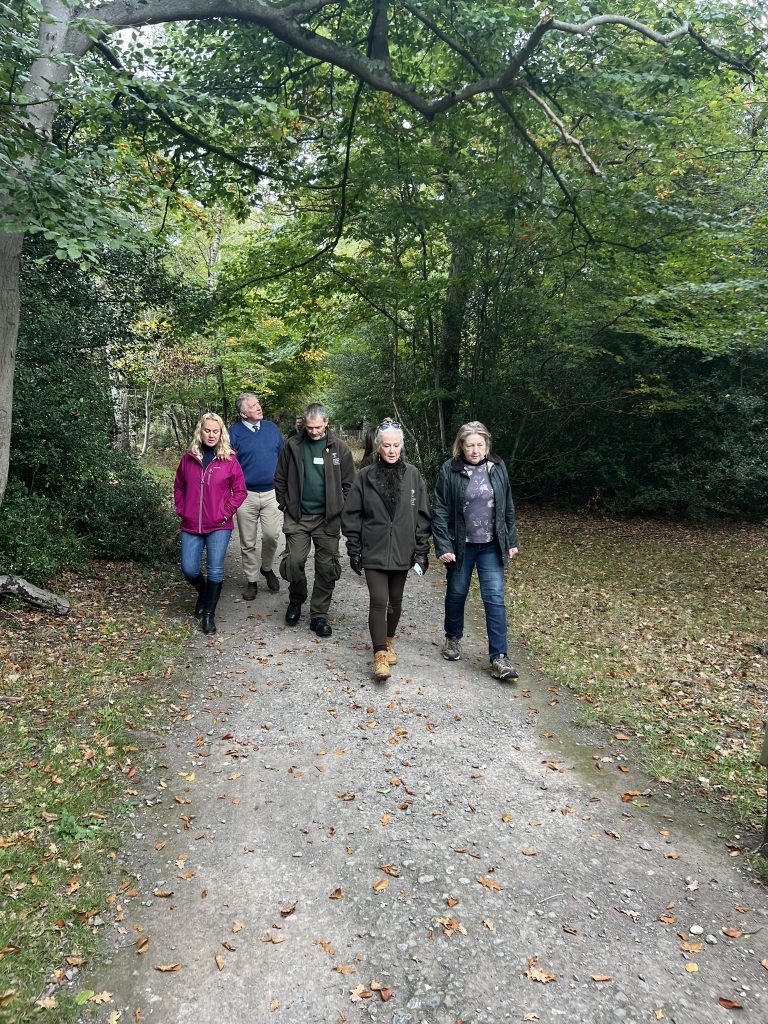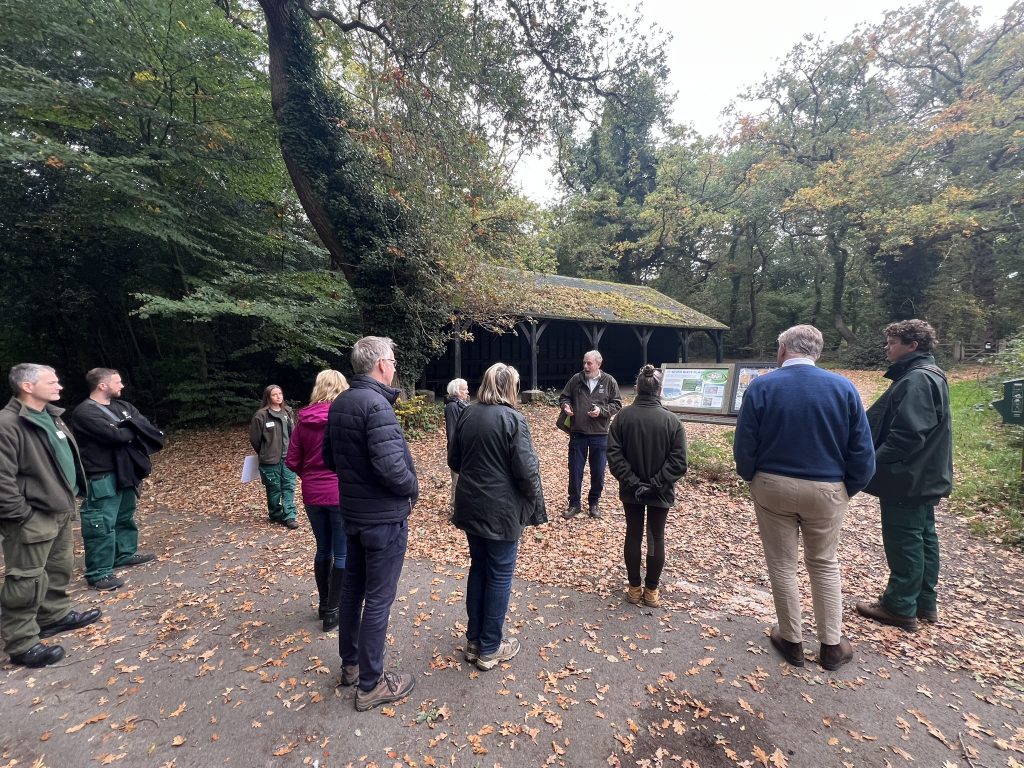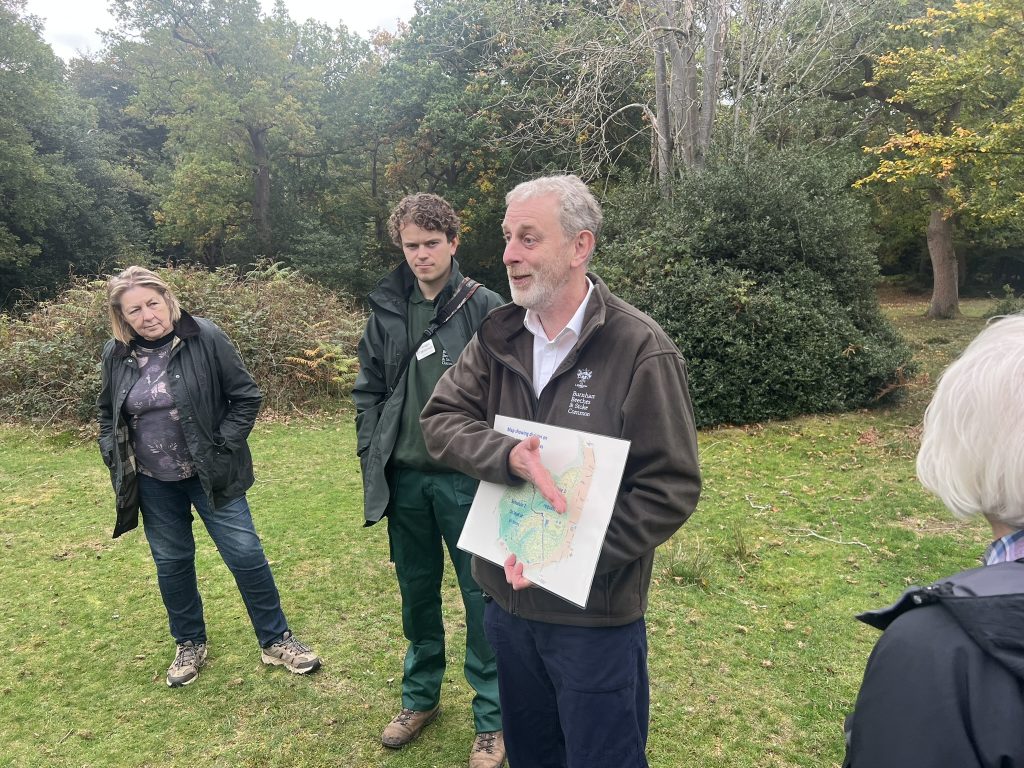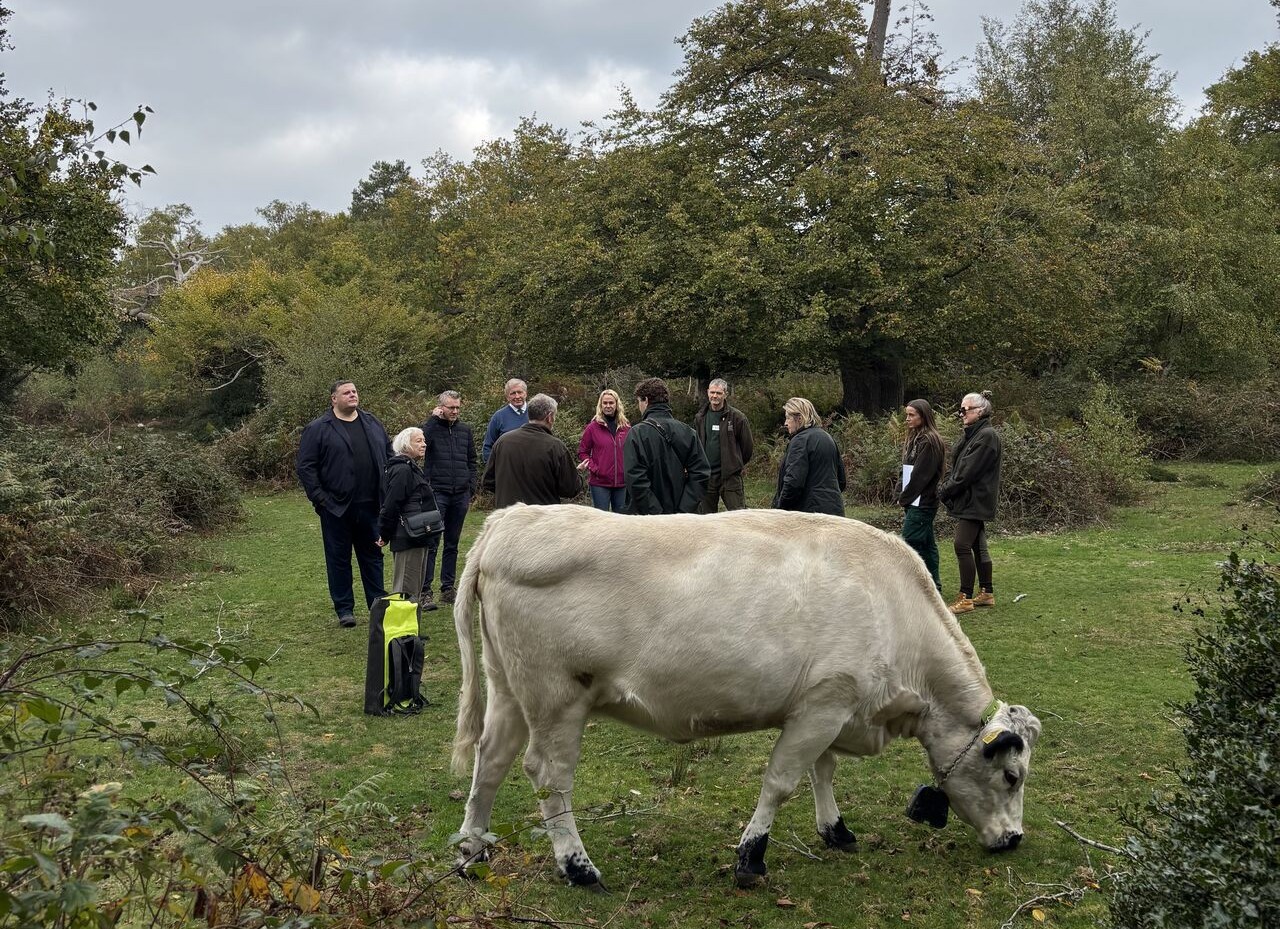
Today, the Epping Forest and Commons Committee hosted a site visit to Burnham Beeches and Stoke Common in Buckinghamshire. It is one of the five charities the Committee is responsible for, alongside Epping Forest (in the London Boroughs of Redbridge, Waltham Forest, Newham, Enfield and in the Epping Forest district, Essex), Ashtead Common (Mole Valley district, Surrey), West Wickham Common (London Borough of Bromley), Coulsdon and other Commons (including Coulsdon Common (Caterham, Surrey), Farthing Downs, Kenley Common and Riddlesdown (all in the London Borough of Croydon)).
At 540 acres, Burnham Beeches and Stoke Common are classified as a Site of Special Scientific Interest, a National Nature Reserve and a Special Area of Conservation: these are internationally important places which have to be very carefully conserved for future generations to enjoy.
In conservation terms, Burnham Beeches is one of the best examples of Atlantic acidophilous beech forests in England. It is an extensive area of former beech wood-pasture with many old pollards and associated beech Fagus sylvatica and oak Quercus spp. high forest. Surveys have shown that it is one of the richest sites for saproxylic invertebrates in the UK, including 14 Red Data Book species. It also retains nationally important epiphytic communities, including the moss Zygodon forsteri.
2 years ago, I had the pleasure of launching a new augmented reality app aligned to our Beacons of the Past project with the Chilterns Area of Outstanding Natural Beauty team. The AR app allows visitors to use their mobile phones or tablet devices to superimpose periods of Burnham Beeches’ history, such as the Iron Age, Middle Ages and World War II when the area was used by the army to hide vehicles before the D-Day landings. The augmented reality app also includes sounds which would have been experienced during each period, as a fully interactive experience.
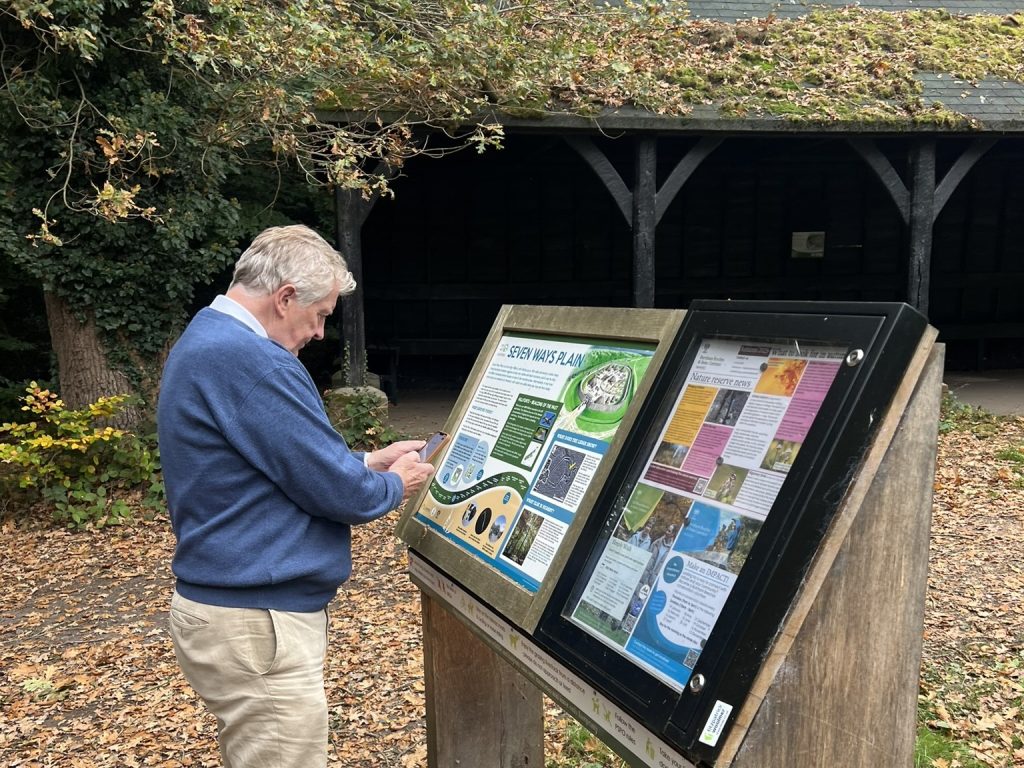
The app has proven to be a really interesting way for people to see that beyond what we can see, there is a rich and fascinating cultural history to many of these green spaces we should continue to celebrate. Epping Forest Verderer, Nicholas Munday, was photographed checking how easy it is to use.
We then proceeded to discuss an issue we spend an inordinate amount of time on – waterbodies! Burnham Beeches has 3 ponds – Swilly Pond, Middle Pond and Upper Pond – each taking a feed ultimately from the River Thames Basin.
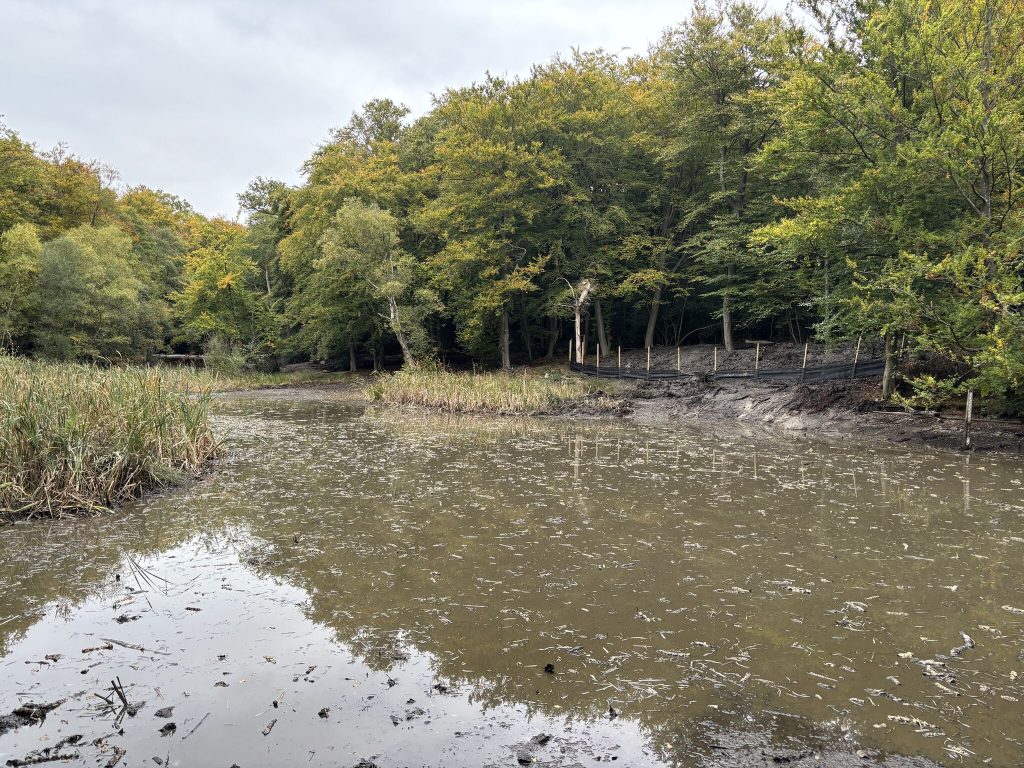
For a number of years, we have been keen to remove much of the invasive vegetation, gravel and silt build-up in the lake, in addition to the many sticks which both overhanging trees and humans love to throw into the ponds which prevent the unique flora and fauna we should see thriving.
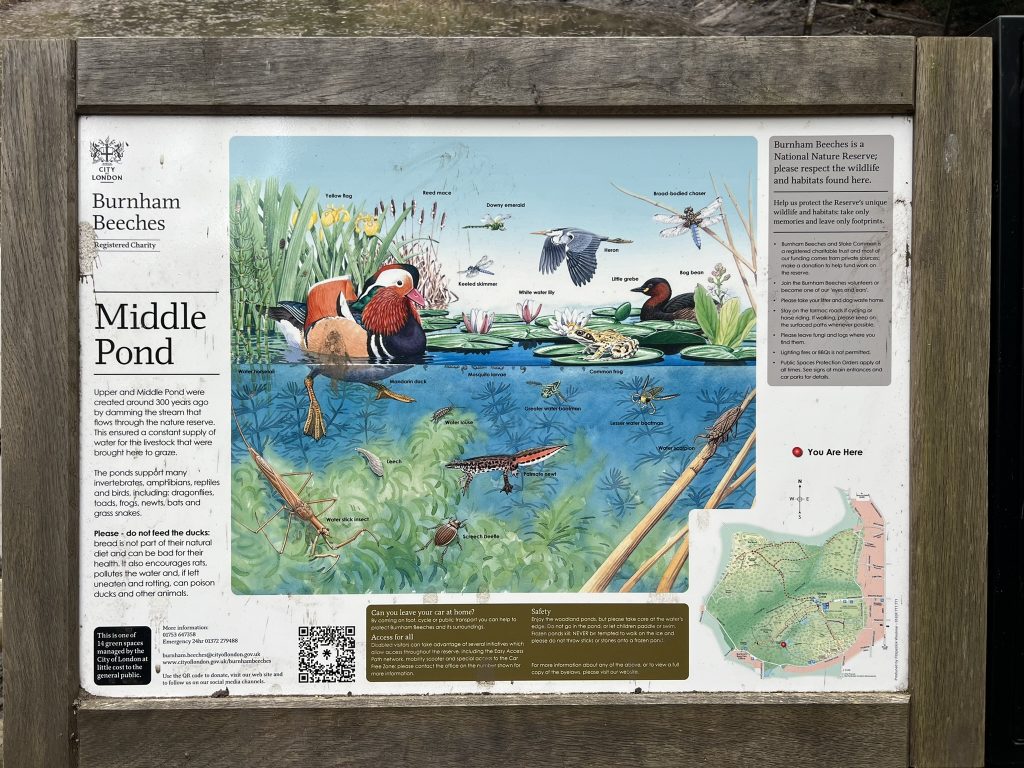
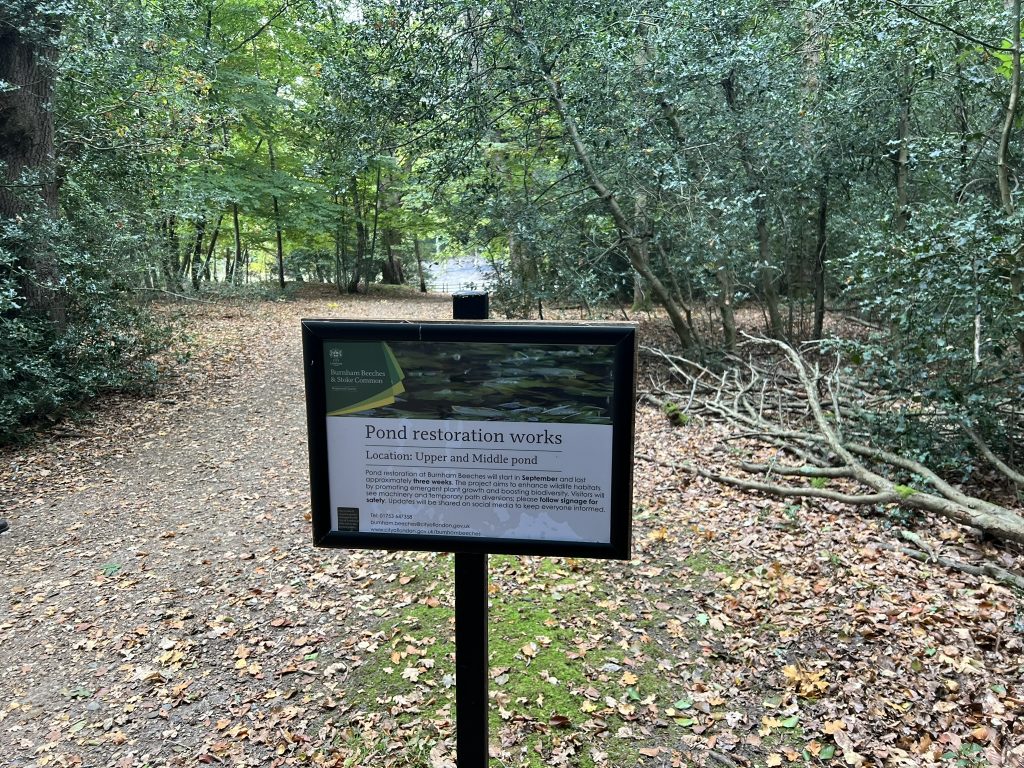
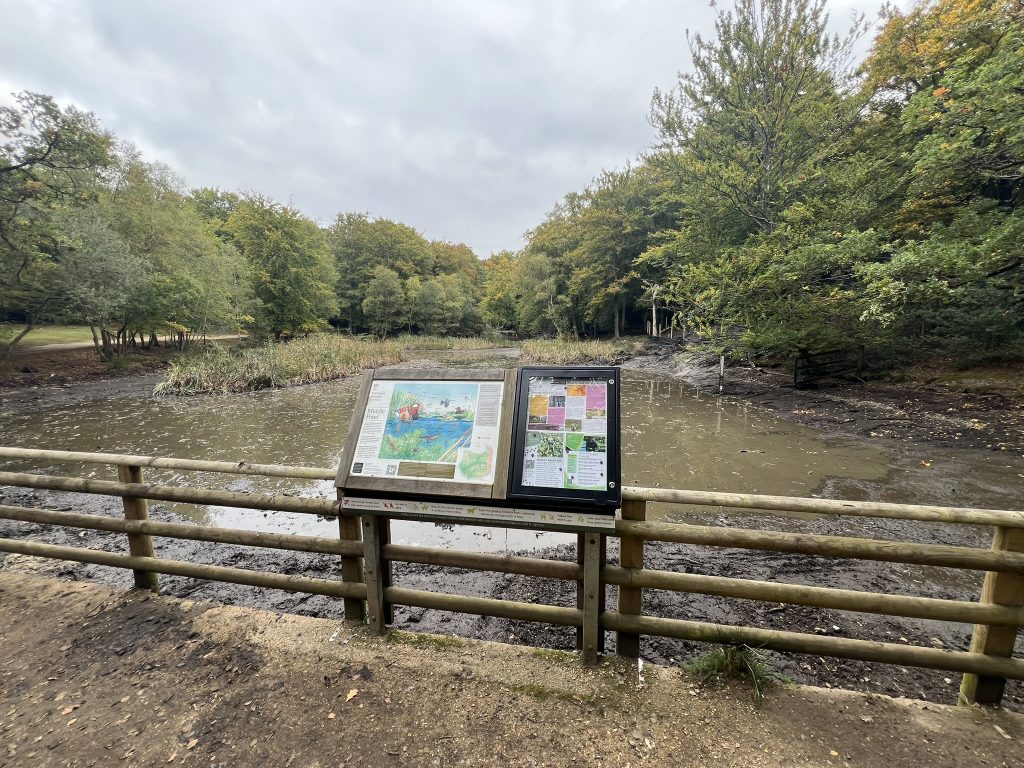
However, these projects are remarkably expensive, as they require specialist equipment, the creation of access points, a storage plan for the waste extracted from the ponds, you have to pump water out to make access easier and you have to carefully co-ordinate public access whilst works are being carried out. There are also limited times of year to do this work to avoid disrupting breading seasons, with a hope for a wet winter to re-fill the ponds after the work is done.
The ancient and veteran trees in Burnham Beeches require a acidic soil. The spring which feeds the ponds is naturally acidic, but unless the vegetation is carefully managed, it can neutralise the acidity from the water, so the balance has to be carefully monitored. We hope that many of the seeds of native species laying around the pond will now have a chance to grow and improve the area, which our Conservation team will be keeping an eye on.
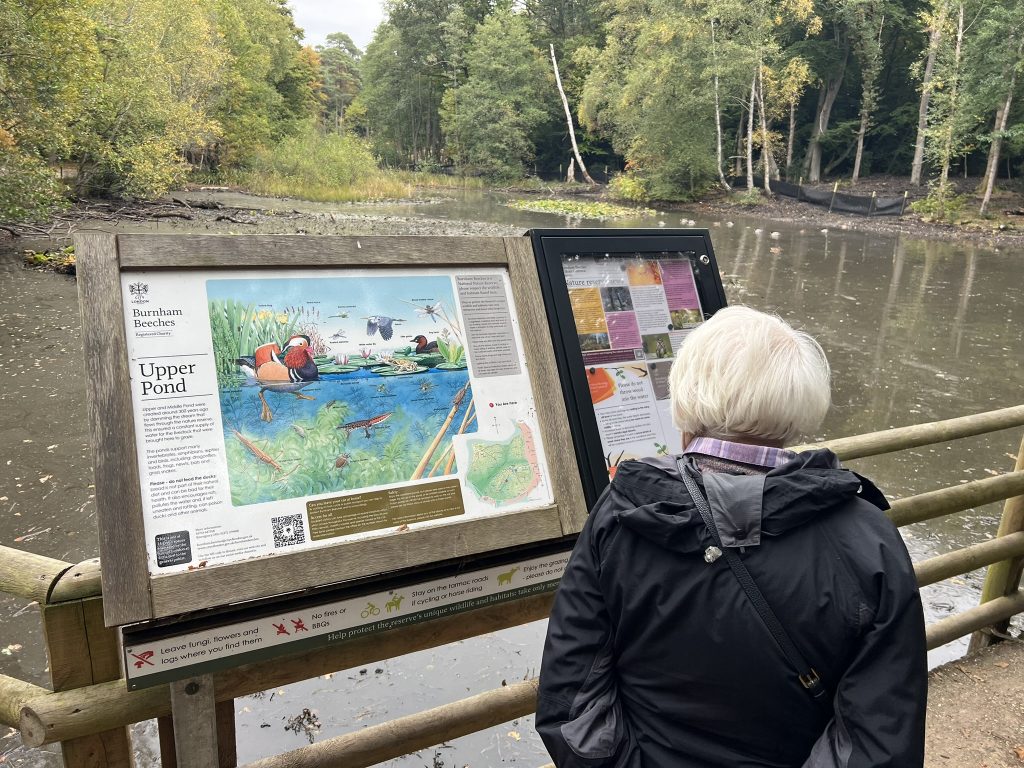
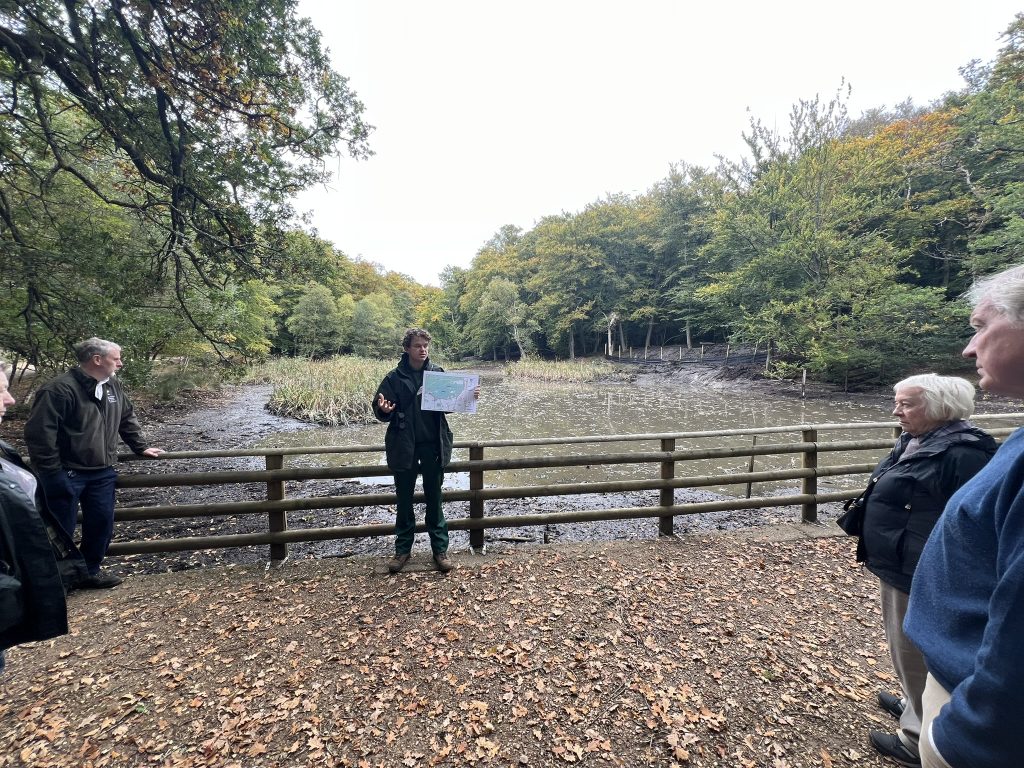
How we manage water resilience, I believe will be one of the great challenges of my generation’s lifetime. As we know, life cannot be sustained without water and the UK Government’s Environment Agency has been clear that, in around 20 to 25 years, England would reach the “jaws of death – the point at which, unless we take action to change things, we will not have enough water to supply our needs”.
It is a fact that we cannot support the government’s nature recovery and biodiversity net gain objectives without addressing water resilience.
As we continued on our visit, we managed to see the new dog waste posters in use, which were designed by students at Farnham Common Junior School. They were showcased by the students recently in the Lord Mayor’s annual visit, and photographed here with Farnham and Stoke Poges Councillor David Moore.
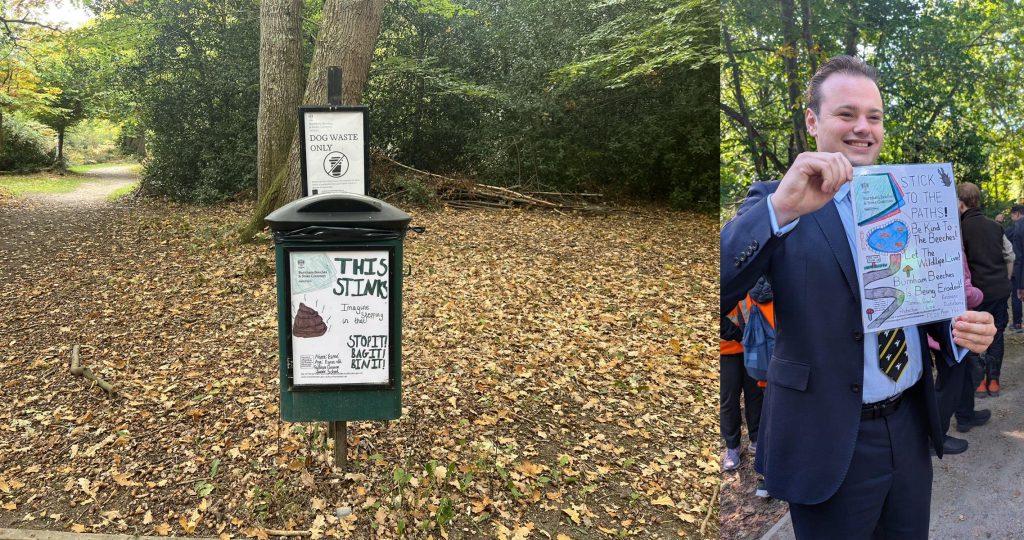
The posters project has been a great way of both educate future generations about why it’s important to protect these green spaces, but it is also a way to show adults that this is something young people care about. The volume of dog waste that is left daily across Burnham Beeches has formed part of a campaign by our Community Ranger team, with a slow reduction over time. However, in Stoke Common, the amount has increased significantly, which requires us to consider what additional steps we may need to take.
We know that statistically, dogs are likely to urinate or defecate within the first 5 minutes of getting to a green space, or out of a car, so often the impact is felt most heavily in specific sites. The volume of waste is pretty shocking though and it has the effect of causing an imbalance in the acidity of the soil, which can have a lasting impact for nature.
Burnham Beeches does have Public Space Protection Orders in place today, which requires dogs to be on a lead for half of the site and dogs to be under effective control for the other half. That doesn’t exist in Stoke Common, but we may have to explore this in the months ahead if the situation doesn’t improve. On the whole though, most visitors are very respectful of the rules and do their bit to help us protect this beautiful site.
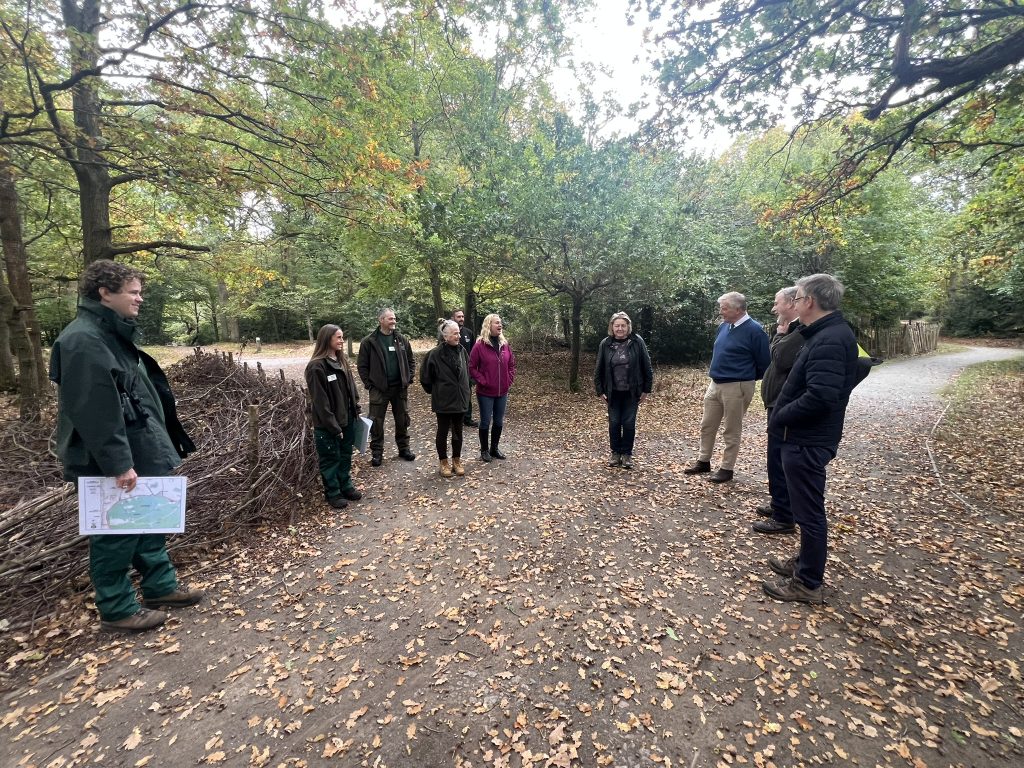
We also managed to see some of the excellent deadwood hedges which have been introduced, to help visitors stick to the defined paths, rather than expanding the path network with increased visitor pressure. Path surveys are being carried out at the moment, alongside soil surveys to understand the impact of soil compaction on tree roots and consider the best way of supporting visitors, whilst protecting the reserve.
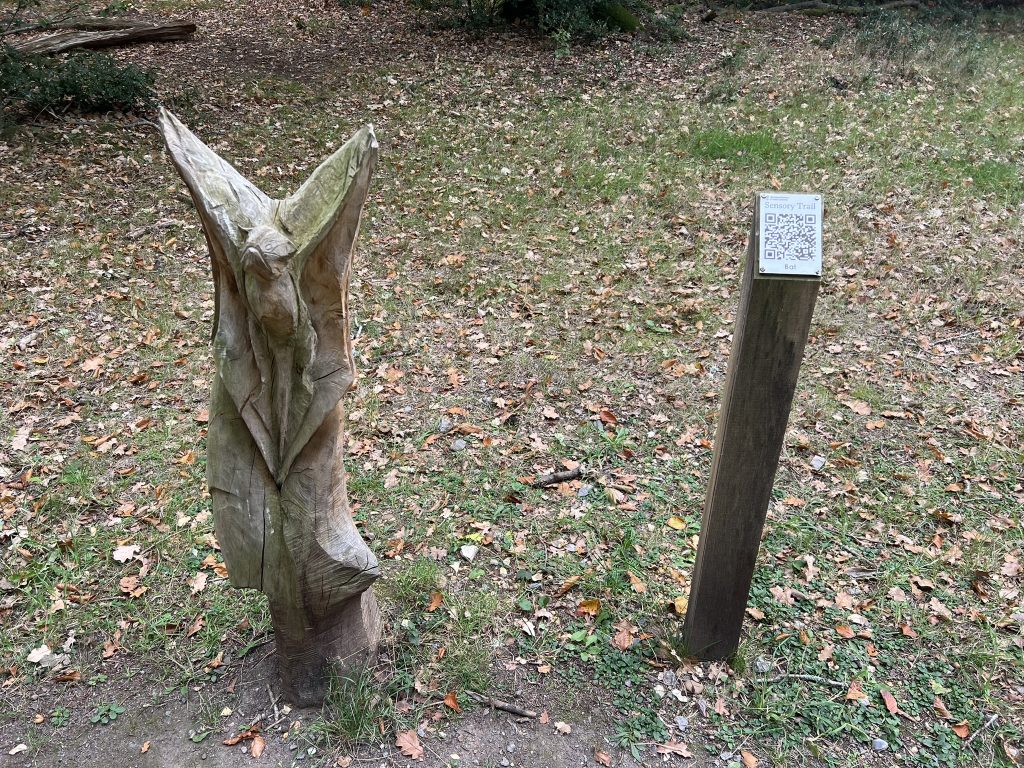
Last year we launched a new sensory woodland sculpture trail around Burnham Beeches, which tells the story of the many unique animals which call the reserve home. It was great to see how these have become much-loved features and are weathering well.
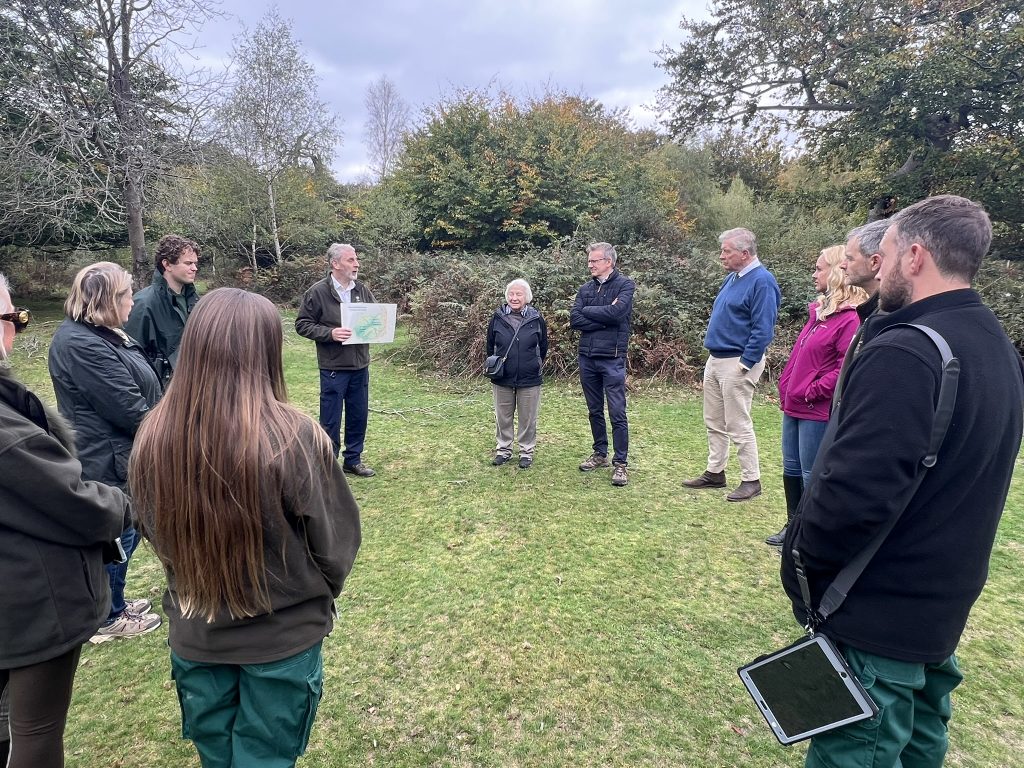
Next on our visit, we had a discussion about the government’s proposed changes to the National Planning Policy Framework, which sets out the Government’s planning policies for England and how these should be applied to provide housing and other development in a sustainable manner. The Framework must be considered when local planning authorities, like Buckinghamshire Council, create their Local Plans.
The Secretary of State has outlined an intention to reclassify some greenbelt land as ‘greybelt’, which could be allowed to be developed in future for housing or commercial purposes. That is a worrying policy change for our open spaces, which are already under huge visitor pressure and whilst we are doing our very best to work with local authorities to mitigate against more visitors and more pollution, there is only so much we can do.
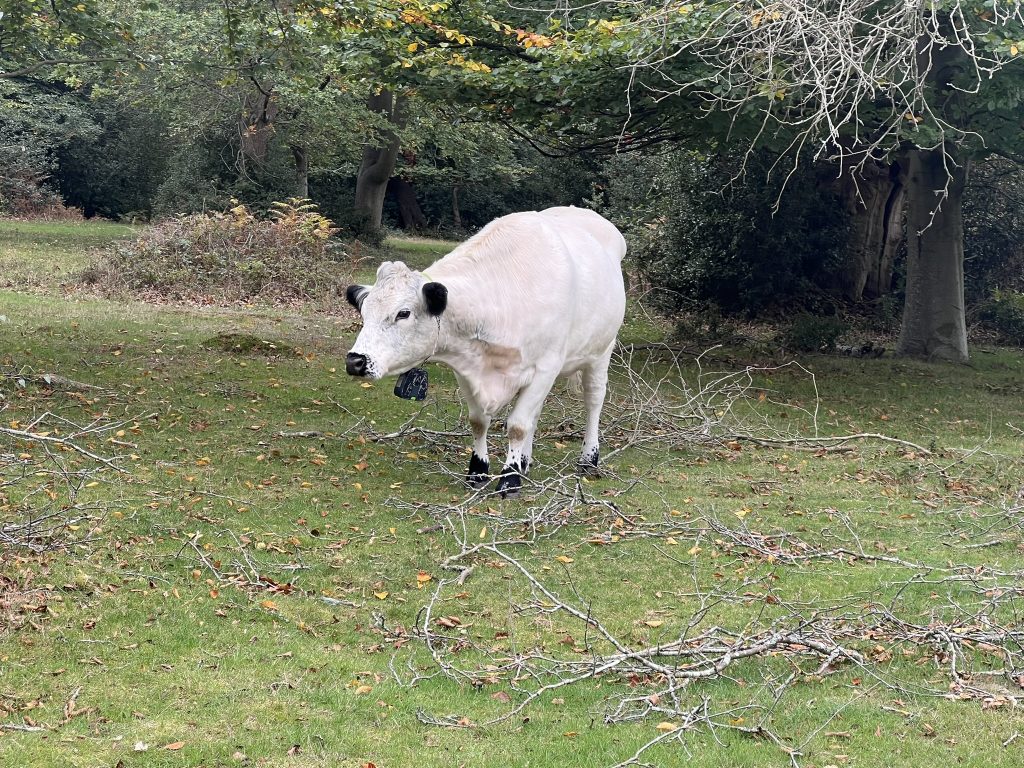
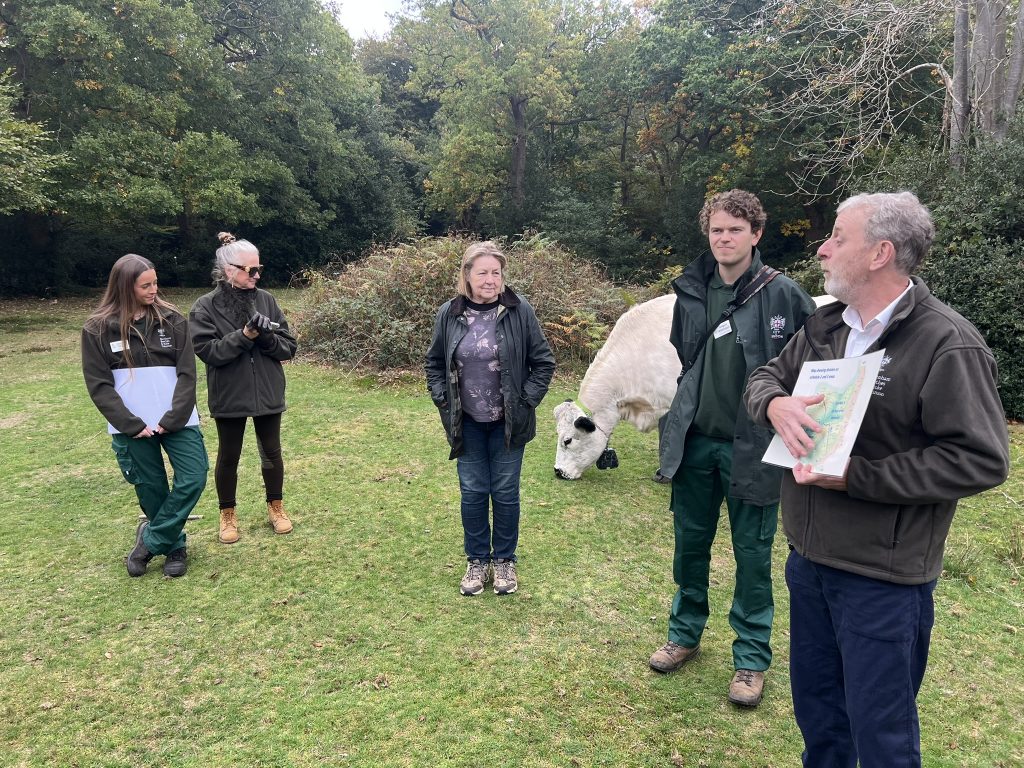
As we were talking, we welcomed a visit by one of our beautiful British White cattle who I think was particularly interested in the discussions about the potential to re-introduce Berkshire pigs in the autumn to eat the acorns and beech mast. Our four-legged conservation colleagues are also ably supported by Exmoor ponies on Stoke Common and Sussex cattle graze the heathland. It’s a team effort!
Finally, we spent some time at the area of Burnham Beeches which is designated for facilitating commercial filming activity. In the past, so many huge Hollywood blockbuster films have been located on the reserve, given it remains one of the greatest ancient woodlands in Europe.
We do have to carefully manage the needs of the reserve and its inhabitants though and so only permit filming activity for 20 years each year, although scene setting and clearance can take several weeks either side of that to ensure all protections are in place before the cameras start rolling.
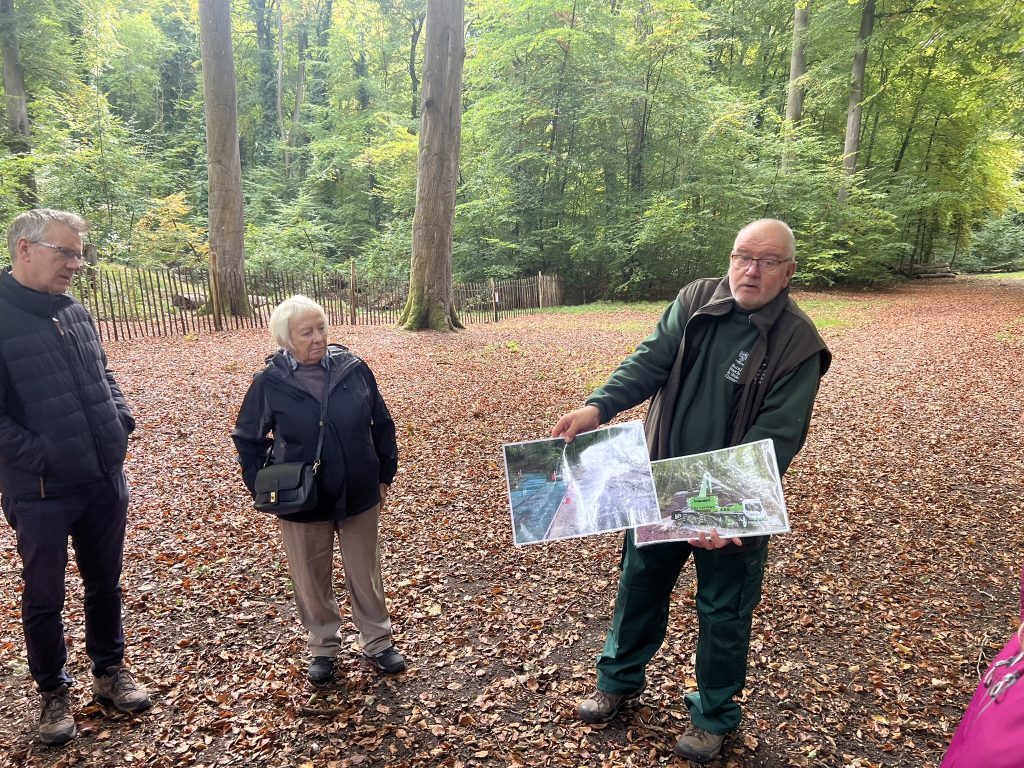
Filming income is really important for the survival of our charity at Burnham Beeches. As I explained in my recent post, it has helped to renovate the Information Centre which has been another feature which is much appreciated by visitors.
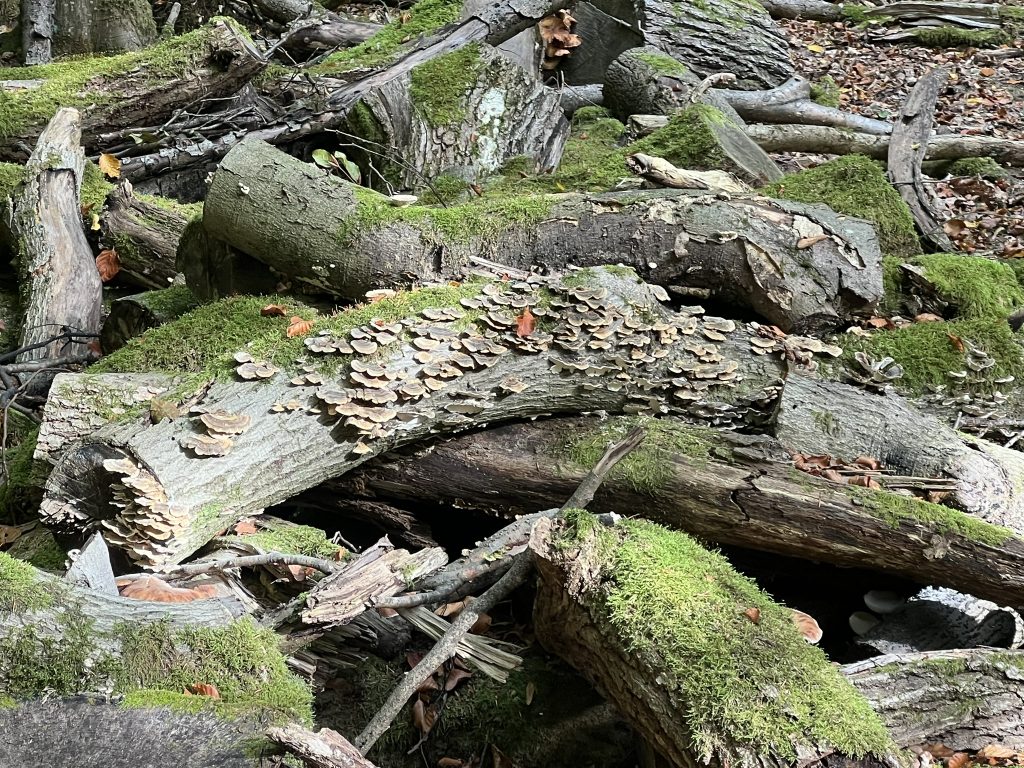
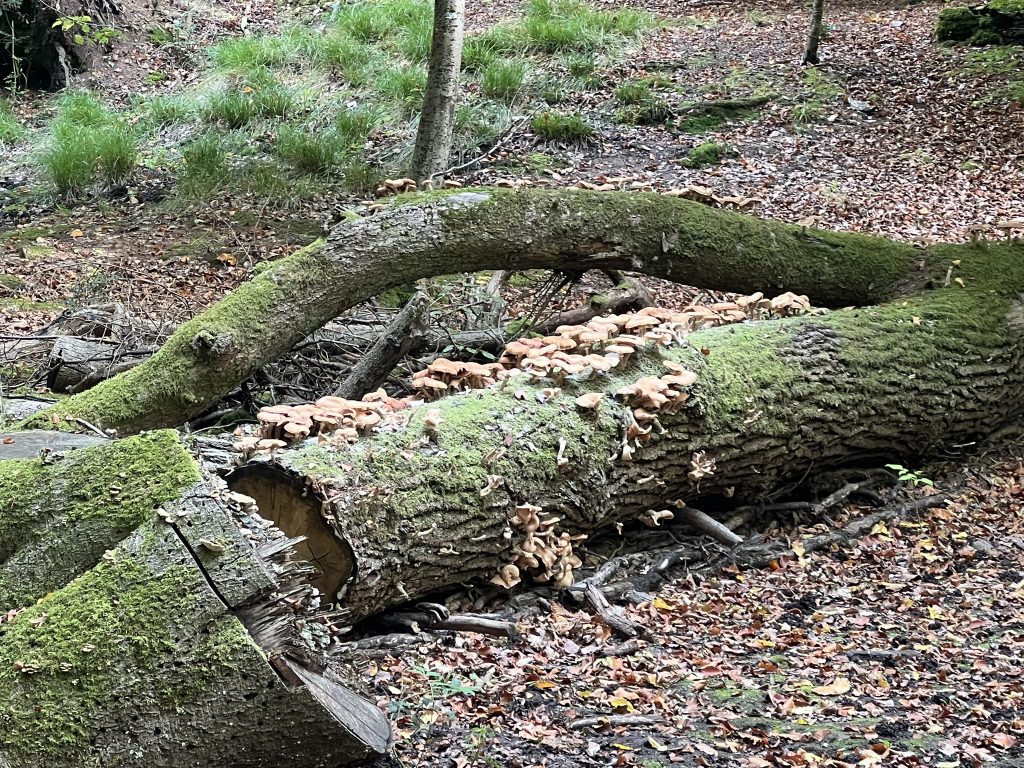
We also got to see some great examples of the fungi starting to appear. Over the next month, we are likely to see some amazing varieties of mushrooms and slime moulds at Burnham Beeches.
As always, my thanks to the staff and volunteers who do such a wonderful job in maintaining this site 365 days a year, helping millions of visitors to connect with nature.